When football took a back seat

Best News Desk
৮-৬-২০২৬ দুপুর ৪:৫৭
When football took a back seat
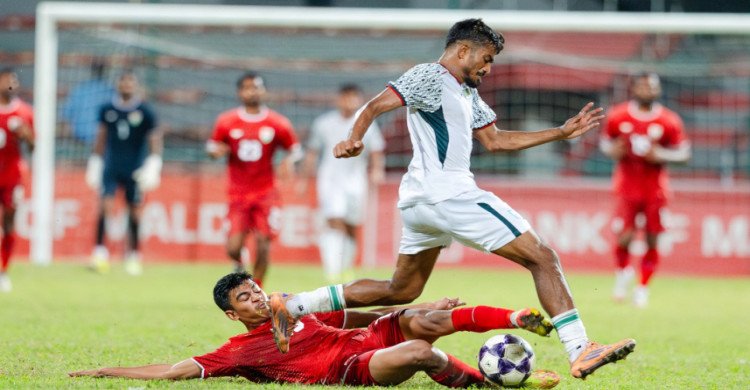
The final group match between Bangladesh and hosts Maldives in a four-nation invitational tournament descended into ugly scenes on Sunday night as neither side got what they desperately wanted -- a victory.
A win would have taken Bangladesh into the final, while for the hosts, three points would have spared them the embarrassment of finishing bottom of a tournament they were staging to celebrate 75 years of football in the Maldives.
For most of the competition, tempers had remained in check. Even the earlier fixture between Pakistan and Afghanistan on the final group-stage matchday, despite the high stakes and the political undertones that inevitably accompany meetings between the two nations, produced little more than a few heated exchanges.
What followed between Bangladesh and Maldives was far more concerning.
Unlike Pakistan and Afghanistan, Bangladesh share cordial ties with the Maldives, a country where lakhs of Bangladeshis work. Yet the body language of the players, particularly during the closing stages, suggested hostility rather than healthy sporting rivalry. It was another reminder of an increasingly worrying trend in Bangladesh's international sporting teams.
Bangladesh players have felt that the referee had repeatedly made decisions against them. It is a familiar refrain. Whenever results fail to go Bangladesh's way, officiating often becomes the central talking point.
Referees may make mistakes. The bigger concern is how players react when they believe they have been wronged.
Too often, young athletes who should be representing their country as ambassadors appear to treat international contests as personal battles. Passion is an essential part of sport, but passion without control quickly turns into indiscipline. When that line is crossed, football takes a back seat and confrontation takes over.
Al Amin, a promising forward who has already represented the senior national team, repeatedly pushed the referee twice, protesting his decisions, while Mirajul Islam, Bangladesh's goalscorer on the night, was sent off from the bench for abusing the official. Both received straight red cards. Had this been a FIFA-sanctioned tournament, the consequences could have been significantly harsher.
Even that was not the end of it.
Towards the end of the match, Bangladesh players and members of the dugout became involved in a full-scale confrontation with their Maldivian counterparts. The situation deteriorated to such an extent that the referee had to be escorted away by security personnel after bringing proceedings to a close.
The incident raises a broader question. While young athletes are taught tactical awareness, technical skills and physical preparation from an early age, sportsmanship, discipline and respect for officials often seem to be treated as secondary concerns.
That is unfortunate because Bangladesh actually had much to be proud of in this tournament.
Maruful Haque's side were the only team to send an Olympic squad, while the other three participants fielded senior national teams.
Bangladesh drew all three matches, including against Maldives and Afghanistan, two sides ranked considerably higher in FIFA's standings. They did not set the tournament alight, but they were organised, competitive and difficult to beat.
Those qualities should have been the main takeaway.
Instead, the final image is one of red cards, protests and a touchline brawl.
For a young team that showed genuine promise throughout the tournament, it was an unnecessary ending and one that risks overshadowing everything they achieved on the pitch.
Best News Desk
৮-৬-২০২৬ দুপুর ৪:৫৭
The final group match between Bangladesh and hosts Maldives in a four-nation invitational tournament descended into ugly scenes on Sunday night as neither side got what they desperately wanted -- a victory.
A win would have taken Bangladesh into the final, while for the hosts, three points would have spared them the embarrassment of finishing bottom of a tournament they were staging to celebrate 75 years of football in the Maldives.
For most of the competition, tempers had remained in check. Even the earlier fixture between Pakistan and Afghanistan on the final group-stage matchday, despite the high stakes and the political undertones that inevitably accompany meetings between the two nations, produced little more than a few heated exchanges.
What followed between Bangladesh and Maldives was far more concerning.
Unlike Pakistan and Afghanistan, Bangladesh share cordial ties with the Maldives, a country where lakhs of Bangladeshis work. Yet the body language of the players, particularly during the closing stages, suggested hostility rather than healthy sporting rivalry. It was another reminder of an increasingly worrying trend in Bangladesh's international sporting teams.
Bangladesh players have felt that the referee had repeatedly made decisions against them. It is a familiar refrain. Whenever results fail to go Bangladesh's way, officiating often becomes the central talking point.
Referees may make mistakes. The bigger concern is how players react when they believe they have been wronged.
Too often, young athletes who should be representing their country as ambassadors appear to treat international contests as personal battles. Passion is an essential part of sport, but passion without control quickly turns into indiscipline. When that line is crossed, football takes a back seat and confrontation takes over.
Al Amin, a promising forward who has already represented the senior national team, repeatedly pushed the referee twice, protesting his decisions, while Mirajul Islam, Bangladesh's goalscorer on the night, was sent off from the bench for abusing the official. Both received straight red cards. Had this been a FIFA-sanctioned tournament, the consequences could have been significantly harsher.
Even that was not the end of it.
Towards the end of the match, Bangladesh players and members of the dugout became involved in a full-scale confrontation with their Maldivian counterparts. The situation deteriorated to such an extent that the referee had to be escorted away by security personnel after bringing proceedings to a close.
The incident raises a broader question. While young athletes are taught tactical awareness, technical skills and physical preparation from an early age, sportsmanship, discipline and respect for officials often seem to be treated as secondary concerns.
That is unfortunate because Bangladesh actually had much to be proud of in this tournament.
Maruful Haque's side were the only team to send an Olympic squad, while the other three participants fielded senior national teams.
Bangladesh drew all three matches, including against Maldives and Afghanistan, two sides ranked considerably higher in FIFA's standings. They did not set the tournament alight, but they were organised, competitive and difficult to beat.
Those qualities should have been the main takeaway.
Instead, the final image is one of red cards, protests and a touchline brawl.
For a young team that showed genuine promise throughout the tournament, it was an unnecessary ending and one that risks overshadowing everything they achieved on the pitch.