4,000 MW Solar Potential at Kaptai Lake: A New Horizon for Green Energy and Blue Economy Investment

Mohammad Anwar
২৩-২-২০২৬ বিকাল ৬:৫০
4,000 MW Solar Potential at Kaptai Lake: A New Horizon for Green Energy and Blue Economy Investment
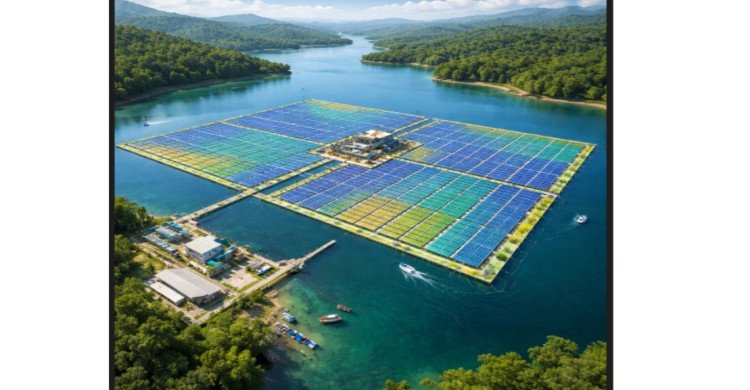
We have been talking about Kaptai Lake for decades, yet only a small portion of its full potential has been utilized. It already supports hydropower, fisheries and tourism. Now it is time to think bigger. The idea of integrating floating solar power with the blue economy is not just another project proposal. It represents a broader development vision. The vast water surface of Kaptai Lake could host floating solar installations alongside modern fisheries infrastructure, creating the country’s largest green energy hub.
Kaptai Lake is the largest man-made lake in Bangladesh, covering approximately 688 square kilometers. It was created in the 1950s through the construction of the Kaptai Dam on the Karnaphuli River. The dam was completed in 1962 with the primary objective of generating electricity through the Karnaphuli Hydropower Plant to meet national demand.
Initially, two units produced a combined 80 megawatts of electricity. Later, three additional turbines were installed in 1982 and 1988, increasing total generation capacity to approximately 230 megawatts. The plant continues to supply electricity to the national grid, contributing an important share of the country’s power needs.
The lake has a storage capacity of around 6,477 million cubic meters of water. Beyond electricity generation, it plays a vital role in fisheries, inland navigation, flood control and irrigation.
As Bangladesh faces rapidly rising electricity demand and increasing land scarcity, floating solar power offers a practical and timely solution. By utilizing water surfaces instead of acquiring new land, such projects can reduce pressure on agricultural and urban areas.
Energy experts estimate that suitable sections of Kaptai Lake could support between 3,000 and 4,000 megawatts of floating solar generation. If realized, this would significantly strengthen the national grid, providing stable energy for industry, urban expansion and technological advancement. Expanding solar power would reduce dependence on imported fuels, including LNG and other fossil fuels, helping conserve foreign currency reserves.
In the long term, the economic benefits could be substantial. Lower electricity costs would reduce industrial production expenses, attract new investment and generate employment. At the same time, expanding renewable energy would support Bangladesh’s climate commitments, help maintain environmental balance and reinforce sustainable economic growth.
One of the major advantages of floating solar systems is the reduced need for additional land acquisition. Solar panels installed over water may also reduce evaporation, contributing to water conservation. However, careful planning and strong environmental assessments are essential. Fish breeding grounds, navigation routes, the livelihoods of local fishermen and the aquatic ecosystem must be protected.
This is where integrated development becomes crucial. Power generation alone is not enough. If floating solar is combined with modern aquaculture, hatcheries, feed mills, cold storage and fish processing industries, the project could become a comprehensive economic engine for the region. It would expand export opportunities, strengthen local livelihoods and promote inclusive development.
Bangladesh is steadily moving toward renewable energy. In line with its international climate commitments, the development of large-scale solar projects is essential. Kaptai Lake stands out as a promising location. However, such an initiative would require substantial investment, making foreign participation particularly important.
Several global companies have gained experience in large-scale solar and floating solar projects. These include TotalEnergies, Masdar, ACWA Power, Enel Green Power, China Three Gorges Corporation, Huaneng Power International, State Power Investment Corporation, CGN New Energy Holdings and PowerChina. With a structured policy framework, long-term power purchase agreements and regulatory stability, Bangladesh could realistically attract investment from such institutions.
Building investor confidence is essential. Political stability, transparency, policy continuity, strong contractual frameworks and guaranteed long-term power purchase arrangements are critical factors. Effective public-private partnership models can play an important role. The message must be clear: Bangladesh has a long-term vision and is committed to implementing it.
There will be challenges. Grid infrastructure upgrades, technical capacity building, environmental protection and social acceptance must be carefully managed. Development will only be sustainable if it is inclusive and participatory.
Kaptai Lake is not just a reservoir; it is a symbol of opportunity. With sound planning, responsible implementation and strong international partnerships, it could emerge as one of the country’s largest green energy and blue economy hubs.
The question now is whether the national leadership is truly prepared to translate this vast potential into reality. Beyond policy discussions, will there be concrete steps toward long-term planning, a robust investment framework and sustainable execution? The success of this initiative ultimately depends on political, economic and administrative accountability. Without that commitment, the project may remain a vision rather than a realized achievement.
Author: Researcher, columnist and analyst of international economics and geopolitics.
Mohammad Anwar
২৩-২-২০২৬ বিকাল ৬:৫০
We have been talking about Kaptai Lake for decades, yet only a small portion of its full potential has been utilized. It already supports hydropower, fisheries and tourism. Now it is time to think bigger. The idea of integrating floating solar power with the blue economy is not just another project proposal. It represents a broader development vision. The vast water surface of Kaptai Lake could host floating solar installations alongside modern fisheries infrastructure, creating the country’s largest green energy hub.
Kaptai Lake is the largest man-made lake in Bangladesh, covering approximately 688 square kilometers. It was created in the 1950s through the construction of the Kaptai Dam on the Karnaphuli River. The dam was completed in 1962 with the primary objective of generating electricity through the Karnaphuli Hydropower Plant to meet national demand.
Initially, two units produced a combined 80 megawatts of electricity. Later, three additional turbines were installed in 1982 and 1988, increasing total generation capacity to approximately 230 megawatts. The plant continues to supply electricity to the national grid, contributing an important share of the country’s power needs.
The lake has a storage capacity of around 6,477 million cubic meters of water. Beyond electricity generation, it plays a vital role in fisheries, inland navigation, flood control and irrigation.
As Bangladesh faces rapidly rising electricity demand and increasing land scarcity, floating solar power offers a practical and timely solution. By utilizing water surfaces instead of acquiring new land, such projects can reduce pressure on agricultural and urban areas.
Energy experts estimate that suitable sections of Kaptai Lake could support between 3,000 and 4,000 megawatts of floating solar generation. If realized, this would significantly strengthen the national grid, providing stable energy for industry, urban expansion and technological advancement. Expanding solar power would reduce dependence on imported fuels, including LNG and other fossil fuels, helping conserve foreign currency reserves.
In the long term, the economic benefits could be substantial. Lower electricity costs would reduce industrial production expenses, attract new investment and generate employment. At the same time, expanding renewable energy would support Bangladesh’s climate commitments, help maintain environmental balance and reinforce sustainable economic growth.
One of the major advantages of floating solar systems is the reduced need for additional land acquisition. Solar panels installed over water may also reduce evaporation, contributing to water conservation. However, careful planning and strong environmental assessments are essential. Fish breeding grounds, navigation routes, the livelihoods of local fishermen and the aquatic ecosystem must be protected.
This is where integrated development becomes crucial. Power generation alone is not enough. If floating solar is combined with modern aquaculture, hatcheries, feed mills, cold storage and fish processing industries, the project could become a comprehensive economic engine for the region. It would expand export opportunities, strengthen local livelihoods and promote inclusive development.
Bangladesh is steadily moving toward renewable energy. In line with its international climate commitments, the development of large-scale solar projects is essential. Kaptai Lake stands out as a promising location. However, such an initiative would require substantial investment, making foreign participation particularly important.
Several global companies have gained experience in large-scale solar and floating solar projects. These include TotalEnergies, Masdar, ACWA Power, Enel Green Power, China Three Gorges Corporation, Huaneng Power International, State Power Investment Corporation, CGN New Energy Holdings and PowerChina. With a structured policy framework, long-term power purchase agreements and regulatory stability, Bangladesh could realistically attract investment from such institutions.
Building investor confidence is essential. Political stability, transparency, policy continuity, strong contractual frameworks and guaranteed long-term power purchase arrangements are critical factors. Effective public-private partnership models can play an important role. The message must be clear: Bangladesh has a long-term vision and is committed to implementing it.
There will be challenges. Grid infrastructure upgrades, technical capacity building, environmental protection and social acceptance must be carefully managed. Development will only be sustainable if it is inclusive and participatory.
Kaptai Lake is not just a reservoir; it is a symbol of opportunity. With sound planning, responsible implementation and strong international partnerships, it could emerge as one of the country’s largest green energy and blue economy hubs.
The question now is whether the national leadership is truly prepared to translate this vast potential into reality. Beyond policy discussions, will there be concrete steps toward long-term planning, a robust investment framework and sustainable execution? The success of this initiative ultimately depends on political, economic and administrative accountability. Without that commitment, the project may remain a vision rather than a realized achievement.
Author: Researcher, columnist and analyst of international economics and geopolitics.