Appointments Must Rise Above Partisanship to Prioritize Merit and Integrity: Adv. Zubayer

Best News Desk
১৬-৯-২০২৬ বিকাল ৬:৩৬
Appointments Must Rise Above Partisanship to Prioritize Merit and Integrity: Adv. Zubayer
Key public and constitutional appointments must be made based on merit, competence, and integrity rather than political affiliation, stated Advocate Ehsanul Mahbub Zubayer, Assistant Secretary General and Central Publicity and Media Secretary of Bangladesh Jamaat-e-Islami.
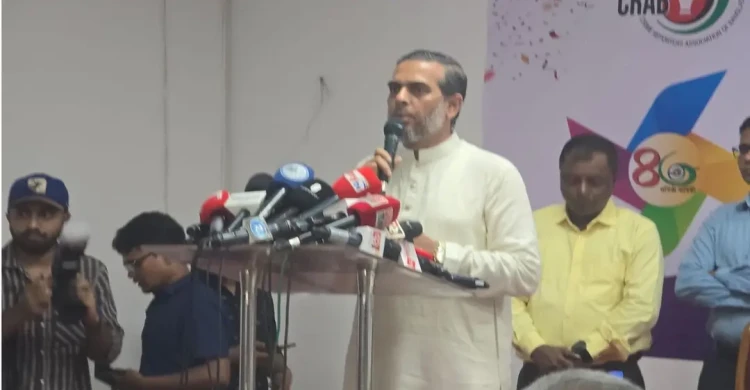
Speaking as the chief guest at the 43rd founding anniversary program of the Crime Reporters Association of Bangladesh (CRAB) in Segunbagicha, Dhaka, on Wednesday (September 16), Zubayer urged the government and political actors to transcend partisan mindsets in public administration.
"Political identity should never serve as a barrier or a prerequisite for serving the nation," Zubayer said. "When qualified, capable, and neutral individuals are entrusted with responsibilities, the nation gains clear direction and momentum."
Media Ethics, Governance Reforms, and Constitutional Balance
Addressing the gathered journalists, Zubayer described reporting as a specialized duty requiring utmost accountability and trust. He stressed the importance of continuous professional development, seminars, and legal workshops for crime reporters to ensure accurate and objective reporting. "Journalists are not only the conscience of society but also our guardians. Constructive criticism from the press must always be welcomed," he added.
Touching upon the national political transition and governance structures, Zubayer highlighted several core areas:
-
July Movement Expectations and State Responsibility: Reminding the audience that present-day Bangladesh stands on the sacrifices of over 1,400 martyrs and 20,000 injured citizens from the July uprising, he called for sustained state support for affected families and injured individuals.
-
Consensus on Structural Reforms: Noting that 33 political parties reached an agreement on reform proposals through the National Consensus Commission—later affirmed by public mandate—he characterized constitutional reform as the central aspiration of the uprising.
-
Executive Power Balance: Emphasizing the need to prevent the concentration of unchecked power in the office of the Prime Minister, he called for institutional checks and balances and non-partisan appointments to constitutional bodies.
-
Utilizing Expatriate Talent: Urging the state to reduce reliance on foreign consultants by engaging Bangladeshi academics, researchers, and PhD holders working abroad in national development initiatives.
-
National Policy Consensus: Calling for long-term bipartisan consensus on fundamental national priorities, including education, economic management, and foreign policy, to ensure stability across government transitions.
Call for Institutional Protection for Crime Journalists
Also speaking at the event, Dr. Shafiqul Islam Masud, Member of Parliament for Patuakhali-2 and Secretary of Jamaat-e-Islami Dhaka City South, emphasized the high-risk nature of investigative crime reporting.
"Crime reporters routinely risk their personal safety to expose high-level corruption, organized crime, and powerful syndicates that often evade standard oversight," Dr. Masud noted, urging the state to institute comprehensive legal and physical protection frameworks for investigative journalists.
Dr. Masud concluded that a protected and independent crime reporting framework remains vital to sustaining democratic accountability and the rule of law in Bangladesh.
Best News Desk
১৬-৯-২০২৬ বিকাল ৬:৩৬
Key public and constitutional appointments must be made based on merit, competence, and integrity rather than political affiliation, stated Advocate Ehsanul Mahbub Zubayer, Assistant Secretary General and Central Publicity and Media Secretary of Bangladesh Jamaat-e-Islami.
Speaking as the chief guest at the 43rd founding anniversary program of the Crime Reporters Association of Bangladesh (CRAB) in Segunbagicha, Dhaka, on Wednesday (September 16), Zubayer urged the government and political actors to transcend partisan mindsets in public administration.
"Political identity should never serve as a barrier or a prerequisite for serving the nation," Zubayer said. "When qualified, capable, and neutral individuals are entrusted with responsibilities, the nation gains clear direction and momentum."
Media Ethics, Governance Reforms, and Constitutional Balance
Addressing the gathered journalists, Zubayer described reporting as a specialized duty requiring utmost accountability and trust. He stressed the importance of continuous professional development, seminars, and legal workshops for crime reporters to ensure accurate and objective reporting. "Journalists are not only the conscience of society but also our guardians. Constructive criticism from the press must always be welcomed," he added.
Touching upon the national political transition and governance structures, Zubayer highlighted several core areas:
-
July Movement Expectations and State Responsibility: Reminding the audience that present-day Bangladesh stands on the sacrifices of over 1,400 martyrs and 20,000 injured citizens from the July uprising, he called for sustained state support for affected families and injured individuals.
-
Consensus on Structural Reforms: Noting that 33 political parties reached an agreement on reform proposals through the National Consensus Commission—later affirmed by public mandate—he characterized constitutional reform as the central aspiration of the uprising.
-
Executive Power Balance: Emphasizing the need to prevent the concentration of unchecked power in the office of the Prime Minister, he called for institutional checks and balances and non-partisan appointments to constitutional bodies.
-
Utilizing Expatriate Talent: Urging the state to reduce reliance on foreign consultants by engaging Bangladeshi academics, researchers, and PhD holders working abroad in national development initiatives.
-
National Policy Consensus: Calling for long-term bipartisan consensus on fundamental national priorities, including education, economic management, and foreign policy, to ensure stability across government transitions.
Call for Institutional Protection for Crime Journalists
Also speaking at the event, Dr. Shafiqul Islam Masud, Member of Parliament for Patuakhali-2 and Secretary of Jamaat-e-Islami Dhaka City South, emphasized the high-risk nature of investigative crime reporting.
"Crime reporters routinely risk their personal safety to expose high-level corruption, organized crime, and powerful syndicates that often evade standard oversight," Dr. Masud noted, urging the state to institute comprehensive legal and physical protection frameworks for investigative journalists.
Dr. Masud concluded that a protected and independent crime reporting framework remains vital to sustaining democratic accountability and the rule of law in Bangladesh.