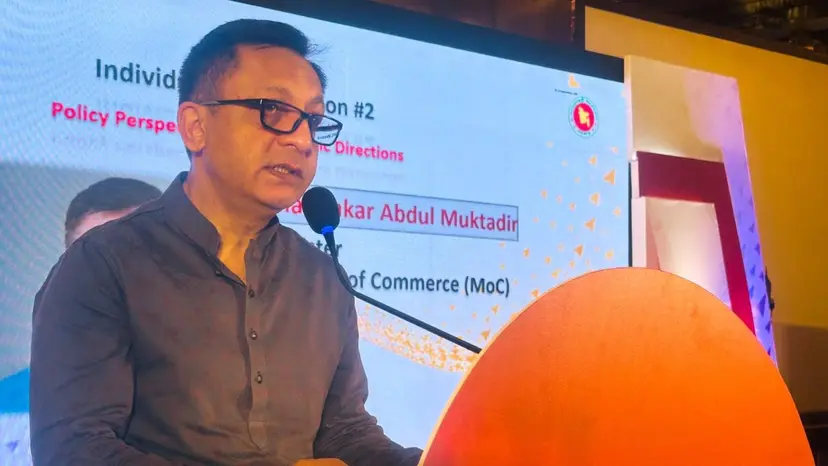
Commerce Minister Khandaker Abdul Muktadir has emphasized the urgent need to ensure strict compliance, boost productivity, and strengthen public-private partnerships (PPP) to sustain the global market competitiveness of Bangladesh's textile and apparel industry. Speaking as the chief guest at a program in Dhaka on Sunday, November 15, 2026, for the project titled 'Skills for Self-Monitoring & Compliance With Clean & Fair Production in the Textile & Garment Industry' (SCAIP), the Minister noted that factories must proactively adapt to shifting buyer demands and emerging environmental and commercial standards.
The event was jointly organized by the Ministry of Commerce and SCAIP, with support from the 'Sustainability in Textile & Leather Industry' (STILE II) project. Highlighting that the RMG sector generates over 80% of total export earnings and employs millions—particularly women—Minister Muktadir stressed that international buyers and regulators now expect safe workplaces, fair labor practices, responsible resource use, and supply chain transparency.
 Read nextBangladeshi Entrepreneur Kazi Fahad Elected JCI Vice President for 2027 at World Congress in Clark, Philippines
He urged factories to align with new European Union (EU) regulations and leverage the extended transition period up to 2029 following LDC graduation. The SCAIP project—funded by the German Federal Ministry for Economic Cooperation and Development (BMZ) and implemented via GIZ in partnership with the Export Promotion Bureau (EPB)—focuses on self-monitoring for efficient water, energy, and chemical usage, digital inspection systems, online ETP monitoring, and traceability strategies.
German Ambassador to Bangladesh Dr. Rüdiger Lotz, GIZ Country Director Mark Gombert, and leaders from BGMEA, BKMEA, and the RMG Sustainability Council (RSC) were also in attendance.
— Daily Best News Desk • Fearless in the search for truth
Reported by Staff Reporter • Edited by the Daily Best News desk. Send corrections to [email protected].