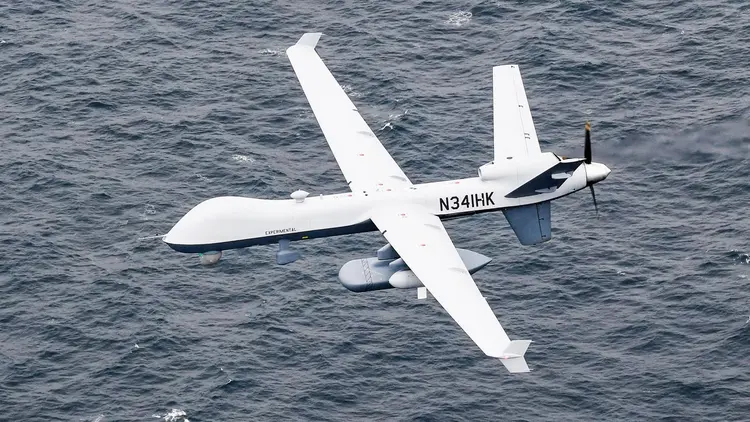
One hundred and twenty-eight countries have agreed to launch an initiative to formulate an international legal instrument regulating the use of lethal autonomous weapons systems, setting a target of two years to complete the process, according to Agence France-Presse (AFP). Organizations campaigning against so-called "killer robots" expressed dissatisfaction with the decision, arguing that the effort is too slow and weak compared to the rapid pace of technological development.
Five consecutive days of talks under the United Nations in Geneva ran past their scheduled time into early Saturday morning, November 21, 2026, before member states reached agreement at the review conference of the Convention on Certain Conventional Weapons (CCW). At the conclusion of the conference, President Julien Thoni announced that 128 CCW member states agreed to pursue an international legal instrument on lethal autonomous weapons systems within the next two years.
 Read nextU.S. Vice President JD Vance Signals Personal Reservations Over Iran War as Trump Weighs In at White House Briefing
Reaching consensus proved difficult amid differences among countries and the requirement for unanimity in decision-making. While most countries favored a legally binding treaty to regulate such weapons, several militarily advanced nations—including the United States and Russia—showed reluctance to accept restrictions on themselves. Swiss diplomat Thoni told AFP that subsequent talks will determine which types of autonomous weapons must be completely prohibited under international humanitarian law and which may be permitted under regulation, adding that states agreed to use the word "formulate" after some nations objected to the term "negotiate."
Campaign groups opposing lethal autonomous weapons said the outcome falls short and warned that delaying necessary restrictions puts civilian lives at greater risk. Nicole van Rooijen, executive director of the coalition, noted that artificial intelligence-enabled autonomous weapons technologies are already being used on battlefields, including for targeting, making delays in creating legally binding rules dangerous for civilians and humanity overall. Verity Coyle, deputy arms director at Human Rights Watch, likewise voiced frustration, saying the decision fails to reflect the urgent action required to set new rules as autonomous weapons capabilities advance alongside artificial intelligence, while human rights and disarmament groups continue pressing for swift, legally binding international restrictions so life-and-death decisions are not left entirely to machines.
— Daily Best News Desk • Fearless in the search for truth
Reported by International Desk • Edited by the Daily Best News desk. Send corrections to [email protected].