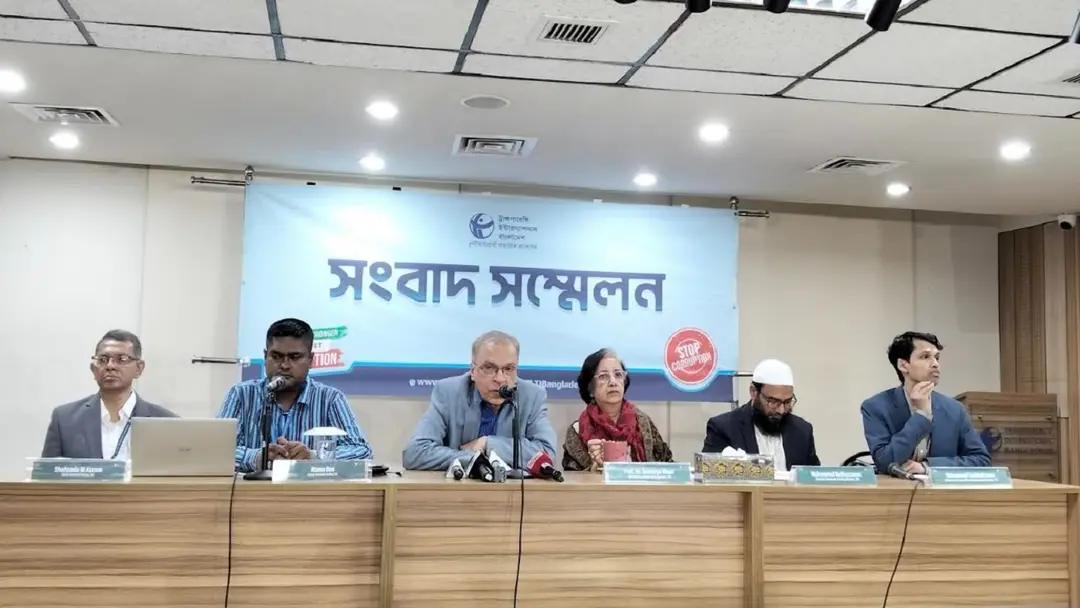
Transparency International Bangladesh (TIB) Executive Director Dr. Iftekharuzzaman has remarked that a form of mafia-like system has taken root in the private housing sector through political influence, middlemen, and collusion with a section of the administration. He warned that these groups are not only dominating business operations but also influencing policy-making structures—fueling corruption, irregularities, forcible land grabbing, and fraud while harming ordinary land and plot buyers.
Dr. Iftekharuzzaman made the remarks at a press conference held on Wednesday, November 25, 2026, at MIDAS Centre in Dhanmondi, Dhaka, to release a TIB research report titled "Governance Challenges in Land Development in the Private Housing Sector in Dhaka City."
Economic Contribution vs. Six Governance Deficits
The TIB Executive Director noted that because the state failed to meet growing housing demand on its own, private entrepreneurs stepped in to fill the gap and now play a vital role in infrastructure development, employment generation, and the national economy—contributing roughly 1.37 lakh crore taka to GDP according to the latest data. Alongside this positive contribution, however, a section of the sector is plagued by corruption, irregularities, harassment, land grabbing, and embezzlement.
According to Dr. Iftekharuzzaman, TIB's research found severe deficits across all six governance indicators in the real estate sector:
- Rule of law
- Institutional capacity and effectiveness
- Transparency
- Participation and stakeholder engagement
- Accountability
- Corruption prevention and control
While some firms claim ISO or LEED certifications, the sector as a whole suffers from weak law enforcement, poor information disclosure, and lack of transparency and accountability—though these shortcomings do not apply equally to every company.
 Read nextRule of Law as the Basis of Democracy in Bangladesh
Systemic Corruption, Black Money & Urban Impact
Dr. Iftekharuzzaman pointed out that existing laws governing real estate contain loopholes and remain poorly enforced, enabling a section of firms to operate without accountability amid transparency, capacity, and willingness deficits among regulators, sections of the administration, and utility authorities.
Evidence of systemic corruption and abuse of power emerged across every stage of land development—from site selection, land demarcation, and purchase to land occupation, project approval, implementation, and plot handover—often becoming institutionalized and leaving ordinary buyers effectively held hostage while undermining the rights of landowners and prospective buyers.
He added that the nexus of political patronage, middlemen, and land-grabbing vested groups—in collusion with a section of the administration—shapes policymaking, while influential segments of real estate companies have also facilitated opportunities to whiten black money. Unaccountable and fraudulent practices by part of the sector have also contributed to turning Dhaka into a concrete jungle, undermining environmental protection, planned urbanization, and sustainable development, with some influential firms even attempting to use sections of the media to serve their interests.
Study Methodology & 13-Point Recommendations
Presenting the research report, TIB researcher Atanu Das said data was collected between August 2024 and July 2026, involving real estate companies, plot buyers and owners, former plot owners, land sellers, and allied institutions. Information was gathered on 50 companies out of more than 350 firms registered with the Land Developers Association, including direct interviews with 20 companies, focusing specifically on governance in private land development within Dhaka city.
To ensure good governance, TIB put forward a 13-point set of recommendations, including:
- Legal Reform & Enforcement: Removing loopholes and amending the Real Estate Development and Management Act, 2010 and related rules with public and stakeholder participation, while ensuring strict enforcement.
- Inter-Agency Coordination: Forming an inter-institutional coordination platform comprising RAJUK, city corporations, the district administration, the Department of Environment (DoE), the Ministry of Land, and relevant bodies.
- Independent Oversight & Redress: Establishing an independent monitoring structure and a neutral national-level authority for resolving complaints.
- Ethical Code of Conduct: Formulating a sector-wide ethical code aligned with international standards and global best practices, overseen by an independent authority—an initiative TIB offered to support alongside government, experts, and stakeholders.
— Daily Best News Desk • Fearless in the search for truth
Reported by Staff Reporter • Edited by the Daily Best News desk. Send corrections to [email protected].