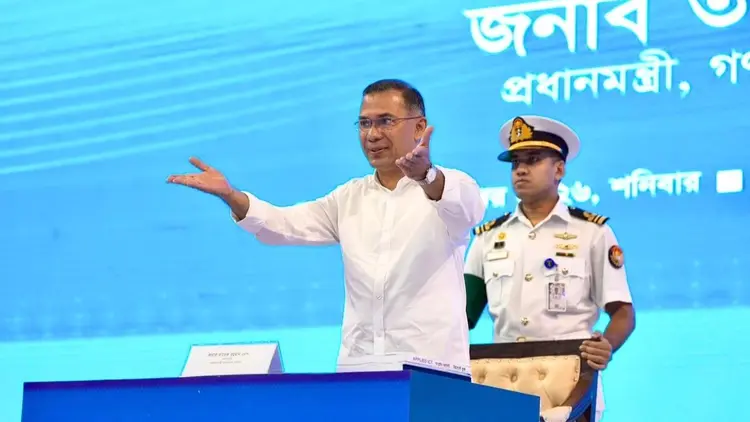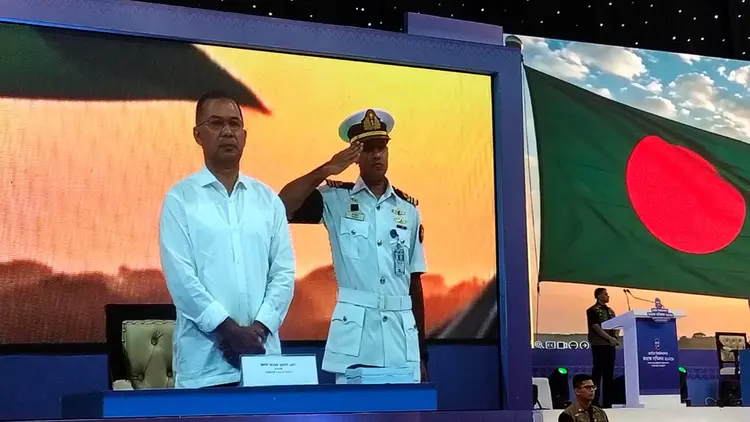
Prime Minister Tarique Rahman has emphasized making higher education technology-driven, skill-based, and employment-oriented to reduce educated unemployment. He stated that unless teachers and students adapt to a modern, technology-based education system, the number of certificate-reliant educated people will increase every year, but unemployment will not decrease.The Prime Minister made these remarks on Saturday, November 28, 2026, at the National University Principals' Conference-2026 in Mirpur.He said that acquiring academic education without gaining practical and technical knowledge and skills is one of the main reasons behind high unemployment among the educated. To meet the challenges of the Fourth Industrial Revolution (4IR), higher education institutions have no alternative but to move beyond conventional education and build a technology-driven, innovation-oriented, skill-based, and employment-ready system.Role of Principals, NU's Founding & Rebuilding EducationAddressing more than 2,300 college principals affiliated with the National University attending the conference, the Prime Minister said their role in spreading the light of education to current and future generations is like a guiding torch. Principals are not merely administrative heads of an institution; they are institutional leaders, moral guides, centers of academic leadership, and architects of future generations, with much of students' future potential depending on their talent, competence, decisions, prudence, and foresight.He noted that former Prime Minister late Khaleda Zia established the National University on October 21, 1992, to create higher education opportunities for everyone, in both towns and villages. Currently, the number of affiliated colleges is nearly 2,500, and while colleges, access, and student numbers have grown since its founding, how much the quality of education has improved remains a vital question.The Prime Minister said that during the period of fascism, the country's education system was destroyed along with everything else, and in a fascism-free Bangladesh, everyone must work together to overhaul the education system. He noted that the government has taken initiatives to formulate, adopt, and implement plans to make education more modern and timely, adding that teacher training is also a demand of the times—where 'Train the Trainer' programs can play an effective role in shifting from traditional teacher-centered teaching to student-centered and research-based teaching methods.4IR Technologies, Industry-Academia Ties, Languages & Teacher SupportHighlighting technologies of the Fourth Industrial Revolution, the Prime Minister said artificial intelligence (AI), robotics, big data, Internet of Things (IoT), blockchain, automation, genetic engineering, biotechnology, cybersecurity, and fifth-generation (5G) wireless technology are fundamentally transforming the future world of work—making some older professions obsolete and contributing to unemployment while creating new job sectors.He observed that while half the world's population has yet to enjoy the benefits of the third industrial revolution, the world has already entered the fourth. Education empowers people, and clear goals turn that power into success; converting acquired knowledge into workplace-ready skills makes industry-academia collaboration essential. Educational institutions should build the knowledge base, industry should turn that knowledge into practical skills through internships, industrial attachments, and hands-on training, and students should emerge as innovators and entrepreneurs creating jobs rather than waiting for employment after graduation.At the same time, the Prime Minister stressed combining modern technical skills with humanistic education—cultivating ethical values, creativity, critical reasoning, and leadership through literature, philosophy, history, science, social science, and culture. To unlock wider opportunities, he urged colleges to offer English as a global medium of communication alongside high-demand international languages such as Arabic, Mandarin, Japanese, Korean, French, German, and Italian, while expanding career counseling, internships, skill development, language clubs, and entrepreneurship opportunities in every affiliated college.Finally, noting government awareness of protecting institutions and teachers, the Prime Minister called on the Ministry of Education, working with the Department of Secondary and Higher Education (DSHE), NTRCA, and the National University authorities, to assess college-wise teacher shortages, fill vacant posts, recruit and deploy teachers, and build teacher capacity.
 Read nextFinance Minister Calls for Coordination Among Isolated Projects of Ministries and Agencies
— Daily Best News Desk • Fearless in the search for truth
Reported by Staff Reporter • Edited by the Daily Best News desk. Send corrections to [email protected].