Water Lily Sold as Commercial Vegetable in Faridpur at 10 BDT a Bundle

Sheikh Foyez Ahmed, Faridpur:
৭-৯-২০২৬ রাত ১০:৩৯
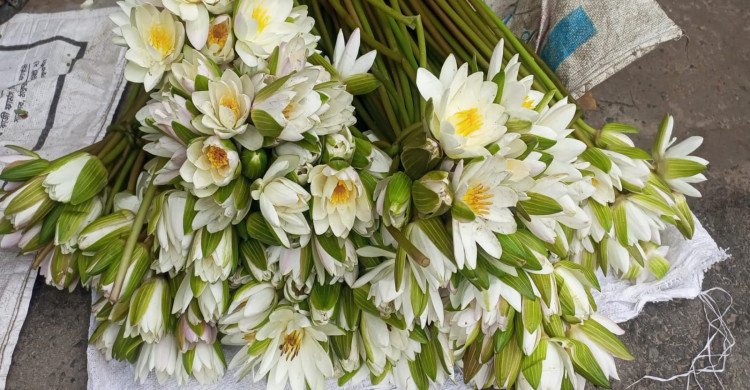
Water Lily Sold as Commercial Vegetable in Faridpur at 10 BDT a Bundle
Water lilies blooming across canals, beels, rivers, and water bodies of Faridpur district reflect a timeless image of rural Bengal. Floating gracefully with white or reddish petals, water lilies are no longer admired merely for their natural beauty—they have now emerged as a sought-after vegetable in various markets across Faridpur. In bazaars across Boalmari, Alfadanga, Saltha, and Modhukhali upazilas, fresh bundles of water lilies are regularly seen alongside conventional vegetables in early morning trade, selling at 10 BDT per bundle. Local vendors harvest the flowers and stems from wetlands and haul them to market stalls, serving as a seasonal culinary favorite for consumers and an accessible source of supplemental income for sellers.
Nurul Alam, a vendor visiting from Gopalganj, shared that he harvests water lilies from wetlands, beels, and marshes in Gopalganj during the monsoon to market them in Faridpur, adding that selling them at 10 BDT a bundle allows him to earn a livelihood while residents cook and enjoy them. A buyer named Sandipan Chakraborty noted that water lily is a familiar staple of rural cuisine cooked with curries and fish, remarking that its freshness and reasonable price make it an attractive buy. Kalipada Chakraborty, retired headteacher of Moyna Government Primary School in Boalmari Upazila, reflected that water lilies remain intrinsically tied to rural heritage, recalling that since his childhood, the plant served both as a blossoming flower and as an everyday vegetable during the monsoon deluge. He observed that commercial trade in local markets revives traditional dietary customs and represents a positive convergence of natural bounty, dietary sustenance, and seasonal livelihoods, enabling low-income collectors to secure extra earnings without initial investment while providing consumers with an affordable, nutritious seasonal vegetable.
Sheikh Foyez Ahmed, Faridpur:
৭-৯-২০২৬ রাত ১০:৩৯
Water lilies blooming across canals, beels, rivers, and water bodies of Faridpur district reflect a timeless image of rural Bengal. Floating gracefully with white or reddish petals, water lilies are no longer admired merely for their natural beauty—they have now emerged as a sought-after vegetable in various markets across Faridpur. In bazaars across Boalmari, Alfadanga, Saltha, and Modhukhali upazilas, fresh bundles of water lilies are regularly seen alongside conventional vegetables in early morning trade, selling at 10 BDT per bundle. Local vendors harvest the flowers and stems from wetlands and haul them to market stalls, serving as a seasonal culinary favorite for consumers and an accessible source of supplemental income for sellers.
Nurul Alam, a vendor visiting from Gopalganj, shared that he harvests water lilies from wetlands, beels, and marshes in Gopalganj during the monsoon to market them in Faridpur, adding that selling them at 10 BDT a bundle allows him to earn a livelihood while residents cook and enjoy them. A buyer named Sandipan Chakraborty noted that water lily is a familiar staple of rural cuisine cooked with curries and fish, remarking that its freshness and reasonable price make it an attractive buy. Kalipada Chakraborty, retired headteacher of Moyna Government Primary School in Boalmari Upazila, reflected that water lilies remain intrinsically tied to rural heritage, recalling that since his childhood, the plant served both as a blossoming flower and as an everyday vegetable during the monsoon deluge. He observed that commercial trade in local markets revives traditional dietary customs and represents a positive convergence of natural bounty, dietary sustenance, and seasonal livelihoods, enabling low-income collectors to secure extra earnings without initial investment while providing consumers with an affordable, nutritious seasonal vegetable.