Moody's Upgrades Bangladesh's Credit Outlook to 'Stable' as Political Uncertainty Recedes

Best News Desk
১৬-৯-২০২৬ দুপুর ১২:২৮
Moody's Upgrades Bangladesh's Credit Outlook to 'Stable' as Political Uncertainty Recedes
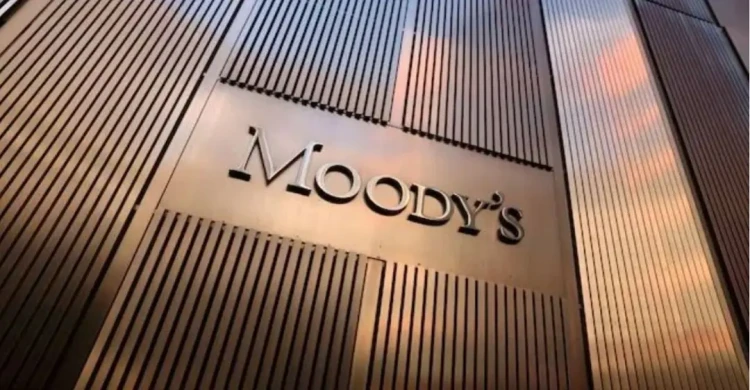
Global credit rating agency Moody's Ratings has revised Bangladesh's sovereign credit outlook from "negative" to "stable," citing reduced political uncertainty, easing external sector pressures, expanding foreign exchange reserves, and record remittance inflows.
In its latest evaluation released on Tuesday (September 15), Moody's stated that the post-election political transition and strong public mandate for the new government have substantially mitigated the risk of political instability disrupting structural reforms. Continued engagement with the International Monetary Fund (IMF) and support from other multilateral partners also remain crucial in securing external financing.
The agency affirmed Bangladesh's long-term issuer and senior unsecured ratings at "B2" and its short-term issuer ratings at "Not Prime." Moody's had previously downgraded Bangladesh's rating from B1 to B2 in March 2025, altering the outlook to negative over concerns regarding deteriorating bank asset quality, elevated inflation, and sluggish growth.
Financial analysts noted that the outlook stabilization will encourage foreign banks to expand credit lines extended to Bangladeshi institutions, easing import financing and trade credit opening.
Muhit Rahman, former Managing Director and Head of Financial Institutions at Standard Chartered Bangladesh, observed that global lenders rely heavily on Moody's ratings to determine dollar credit limits. "With the upgrade, foreign banks will begin restoring credit lines, facilitating the opening of Letters of Credit (LCs). Increased dollar liquidity could also help moderate borrowing costs," Rahman explained. He added that the central bank's Tk 60,000 crore stimulus package will further accelerate capital machinery and raw material imports, boosting private sector credit flow, operationalizing idle factories, and driving GDP growth.
Foreign Reserves and Remittances Expand
According to Moody's, official foreign exchange reserves surged to approximately $32.9 billion by mid-2026—up from $21.4 billion in 2024—providing coverage for over four months of import payments. The growth was propelled by record remittance channels, a flexible exchange rate regime, and market-driven exchange rate reforms.
The agency projected a gradual economic recovery, forecasting real GDP growth at 4.1 percent for FY2025–26 (up from 3.5 percent in FY2024–25), reaching 4.3 percent in FY2026–27 and potentially 4.9 percent in FY2027–28 as industrial output normalizes. Inflation, however, is expected to persist around 9 percent before gradually tapering off.
Banking Vulnerabilities and Fiscal Constraints
Despite the outlook upgrade, Moody's maintained the B2 rating due to structural vulnerabilities in the banking sector, where non-performing loans (NPLs) have reached roughly 32.8 percent. The agency estimated that bank recapitalizations equivalent to 10 percent of GDP may be required to restore regulatory capital adequacy, creating significant fiscal pressure on the state. However, robust annual deposit growth of 12 percent through March 2026 indicates that the banking sector's primary challenge remains solvency rather than liquidity.
Moody's also highlighted Bangladesh's exceptionally narrow tax-to-GDP ratio—among the lowest globally—which limits fiscal flexibility. Interest payments currently absorb nearly 30 percent of total government revenue, though public debt remains at a manageable level relative to GDP. Additionally, recent operational disruptions at LNG terminals underlined vulnerabilities in national energy infrastructure, while upcoming graduation from Least Developed Country (LDC) status presents medium-term trade and concessional financing challenges.
Best News Desk
১৬-৯-২০২৬ দুপুর ১২:২৮
Global credit rating agency Moody's Ratings has revised Bangladesh's sovereign credit outlook from "negative" to "stable," citing reduced political uncertainty, easing external sector pressures, expanding foreign exchange reserves, and record remittance inflows.
In its latest evaluation released on Tuesday (September 15), Moody's stated that the post-election political transition and strong public mandate for the new government have substantially mitigated the risk of political instability disrupting structural reforms. Continued engagement with the International Monetary Fund (IMF) and support from other multilateral partners also remain crucial in securing external financing.
The agency affirmed Bangladesh's long-term issuer and senior unsecured ratings at "B2" and its short-term issuer ratings at "Not Prime." Moody's had previously downgraded Bangladesh's rating from B1 to B2 in March 2025, altering the outlook to negative over concerns regarding deteriorating bank asset quality, elevated inflation, and sluggish growth.
Financial analysts noted that the outlook stabilization will encourage foreign banks to expand credit lines extended to Bangladeshi institutions, easing import financing and trade credit opening.
Muhit Rahman, former Managing Director and Head of Financial Institutions at Standard Chartered Bangladesh, observed that global lenders rely heavily on Moody's ratings to determine dollar credit limits. "With the upgrade, foreign banks will begin restoring credit lines, facilitating the opening of Letters of Credit (LCs). Increased dollar liquidity could also help moderate borrowing costs," Rahman explained. He added that the central bank's Tk 60,000 crore stimulus package will further accelerate capital machinery and raw material imports, boosting private sector credit flow, operationalizing idle factories, and driving GDP growth.
Foreign Reserves and Remittances Expand
According to Moody's, official foreign exchange reserves surged to approximately $32.9 billion by mid-2026—up from $21.4 billion in 2024—providing coverage for over four months of import payments. The growth was propelled by record remittance channels, a flexible exchange rate regime, and market-driven exchange rate reforms.
The agency projected a gradual economic recovery, forecasting real GDP growth at 4.1 percent for FY2025–26 (up from 3.5 percent in FY2024–25), reaching 4.3 percent in FY2026–27 and potentially 4.9 percent in FY2027–28 as industrial output normalizes. Inflation, however, is expected to persist around 9 percent before gradually tapering off.
Banking Vulnerabilities and Fiscal Constraints
Despite the outlook upgrade, Moody's maintained the B2 rating due to structural vulnerabilities in the banking sector, where non-performing loans (NPLs) have reached roughly 32.8 percent. The agency estimated that bank recapitalizations equivalent to 10 percent of GDP may be required to restore regulatory capital adequacy, creating significant fiscal pressure on the state. However, robust annual deposit growth of 12 percent through March 2026 indicates that the banking sector's primary challenge remains solvency rather than liquidity.
Moody's also highlighted Bangladesh's exceptionally narrow tax-to-GDP ratio—among the lowest globally—which limits fiscal flexibility. Interest payments currently absorb nearly 30 percent of total government revenue, though public debt remains at a manageable level relative to GDP. Additionally, recent operational disruptions at LNG terminals underlined vulnerabilities in national energy infrastructure, while upcoming graduation from Least Developed Country (LDC) status presents medium-term trade and concessional financing challenges.