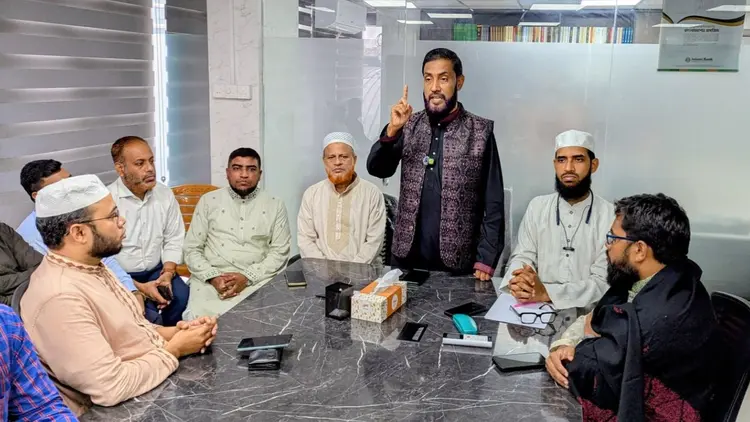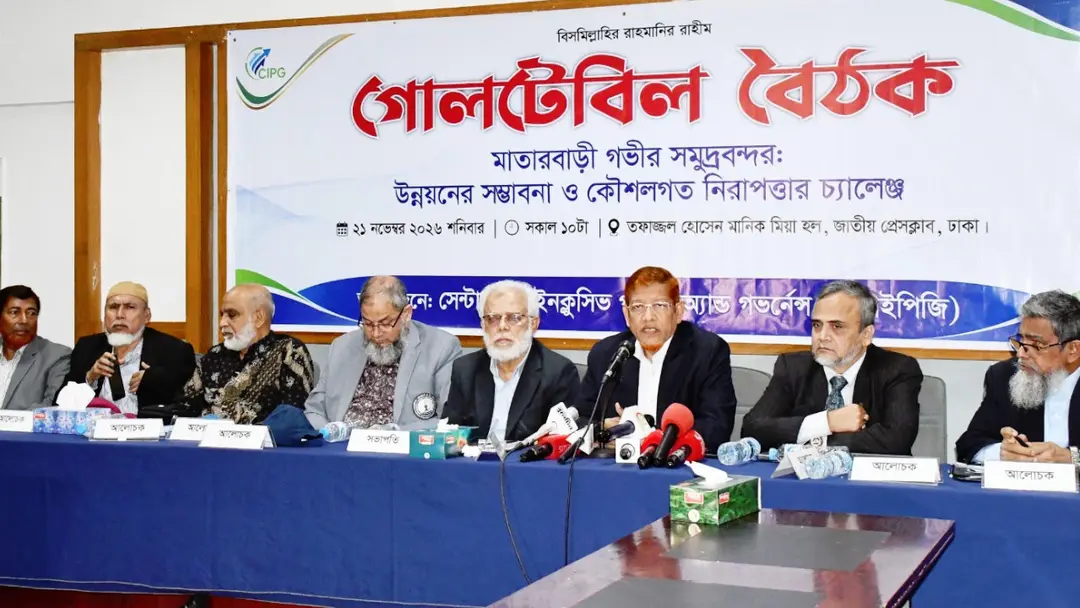
Dr. AHM Hamidur Rahman Azad, Assistant Secretary General of Bangladesh Jamaat-e-Islami and former Member of Parliament for Maheshkhali-Kutubdia, has called for ensuring Bangladesh's full control over the operation, security, and policymaking of the Matarbari Deep Sea Port, warning that complete control must remain in Bangladesh's hands so no operating entity can turn into an "East India Company" in the future. He made the remarks on Saturday, November 21, 2026, at a roundtable titled "Matarbari Deep Sea Port: Development Prospects and Strategic Security Challenges" organized by the Centre for Inclusive Policy and Governance (CIPG) at the Manik Mia Hall of the National Press Club.Azad said a seaport is both an economic blessing and a major national and geopolitical challenge, urging that the Bay of Bengal and Matarbari port be utilized while keeping national security intact, protecting local interests, and addressing harmful project impacts—noting that many displaced residents are still going from office to office for compensation. Commodore (Retd.) Syed Misbah Uddin Ahmed, former Bangladesh Navy officer, maritime researcher, and Director General of BIMRAD, said foreign cargo vessels passing through Bangladesh must remain under Bangladeshi control and follow Bangladesh's directives, adding that internal communication infrastructure and uninterrupted connectivity are essential to reap economic benefits. Former Senior Secretary Shafiullah said Bangladesh's policy should not target any country, but rather focus on economic development, strategic security, and safeguarding national interests through dialogue.Presenting the keynote paper, Dr. Mizanur Rahman said Matarbari Deep Sea Port could boost import-export trade, reduce transport costs and time, and become a key regional transshipment hub, noting a planned channel depth of 18.5 meters for large vessels with roughly 16-meter drafts, though warning that expected returns require sufficient cargo, modern management, effective connectivity, and port-centric industrialization. Speakers put forward four recommendations: ensuring full Bangladeshi authority over operations, security, and strategic decisions; avoiding foreign dominance and dependence on any single state; conducting a comparative cost-benefit evaluation of the Sonadia and Matarbari projects with transparency in loans and expenditures; and safeguarding economic interests through fair port tariffs, reciprocal market access, and equitable transit agreements with neighbors including India, Nepal, and Bhutan, alongside coordination with Chattogram Port, local job creation, and coastal environmental protection. Chaired by CIPG Chairman Prof. Dr. Mozammel Haque and moderated by Executive Director Dr. Khurshid Alam, the roundtable concluded that Matarbari's success must be judged by economic growth, trade capacity, local employment, national security, and long-term sovereign interests. Photo Caption:Hashtags:,
 Read nextBNP's Ruhul Kabir Rizvi Highlights Armed Forces' Role in Protecting Sovereignty at Armed Forces Day Rally
— Daily Best News Desk • Fearless in the search for truth
Reported by Staff Reporter • Edited by the Daily Best News desk. Send corrections to [email protected].