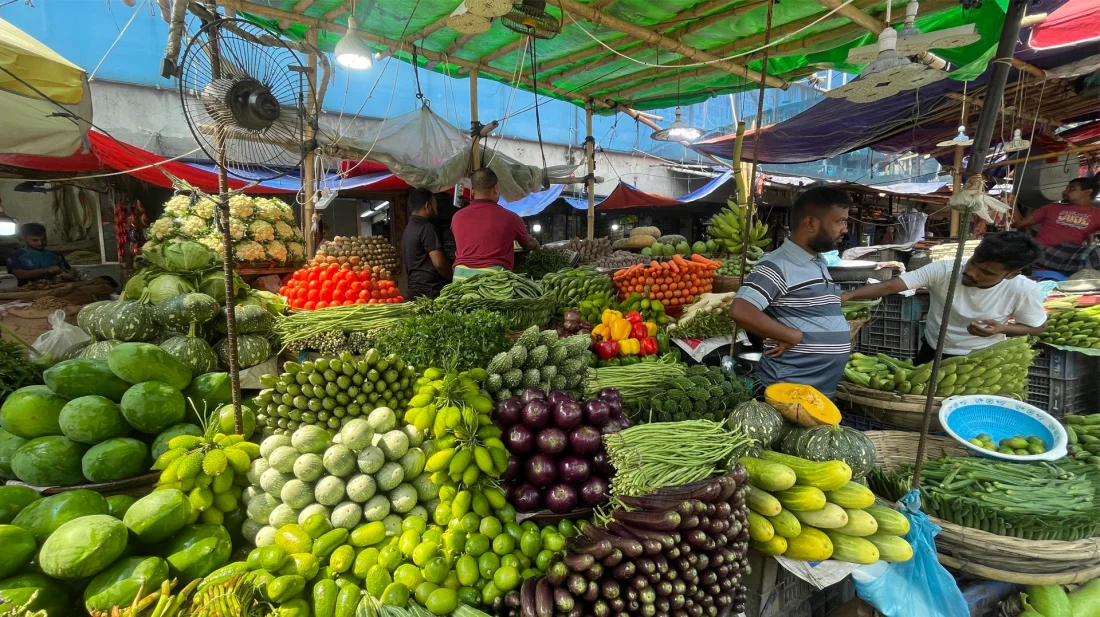
Steep price hikes across essential vegetables, spices, and protein sources are forcing limited-income families in Dhaka to drastically cut back on daily expenses, according to a market survey conducted at the Mirpur-1 kitchen market on Monday (October 12, 2026).
With the exception of papaya, which sold for a modest Tk 20–30 per kg, virtually all vegetables crossed the Tk 50 threshold. Tomatoes recorded the highest surge at Tk 220 per kg, followed by beans at Tk 140–160, carrots at Tk 100–120, and various brinjals ranging between Tk 80 and Tk 140 per kg. While potatoes and local onions provided relative relief at Tk 30 and Tk 50–55 per kg, imported Chinese ginger and garlic registered further increases.
Poultry and egg prices remained stubbornly high, with broiler chicken trading at Tk 175–195 per kg and red eggs at Tk 140–145 per dozen. Frustrated shoppers and low-wage earners, such as rickshaw pullers and office clerks, reported shifting their shopping routines to late-evening street vendors to secure lower-priced, bruised produce just to make ends meet.
— Daily Best News Desk • Fearless in the search for truth
Reported by Staff Reporter • Edited by the Daily Best News desk. Send corrections to [email protected].