Two projects worth 44 crore taka have been undertaken to restore the Alaikuri River and Shyamasundari Canal in Rangpur. However, civil society representatives are demanding clear information on what work will be carried out under these projects, how the funds will be spent, and who will supervise the quality of work. To ensure transparency and accountability, they have also formed a citizen monitoring committee.
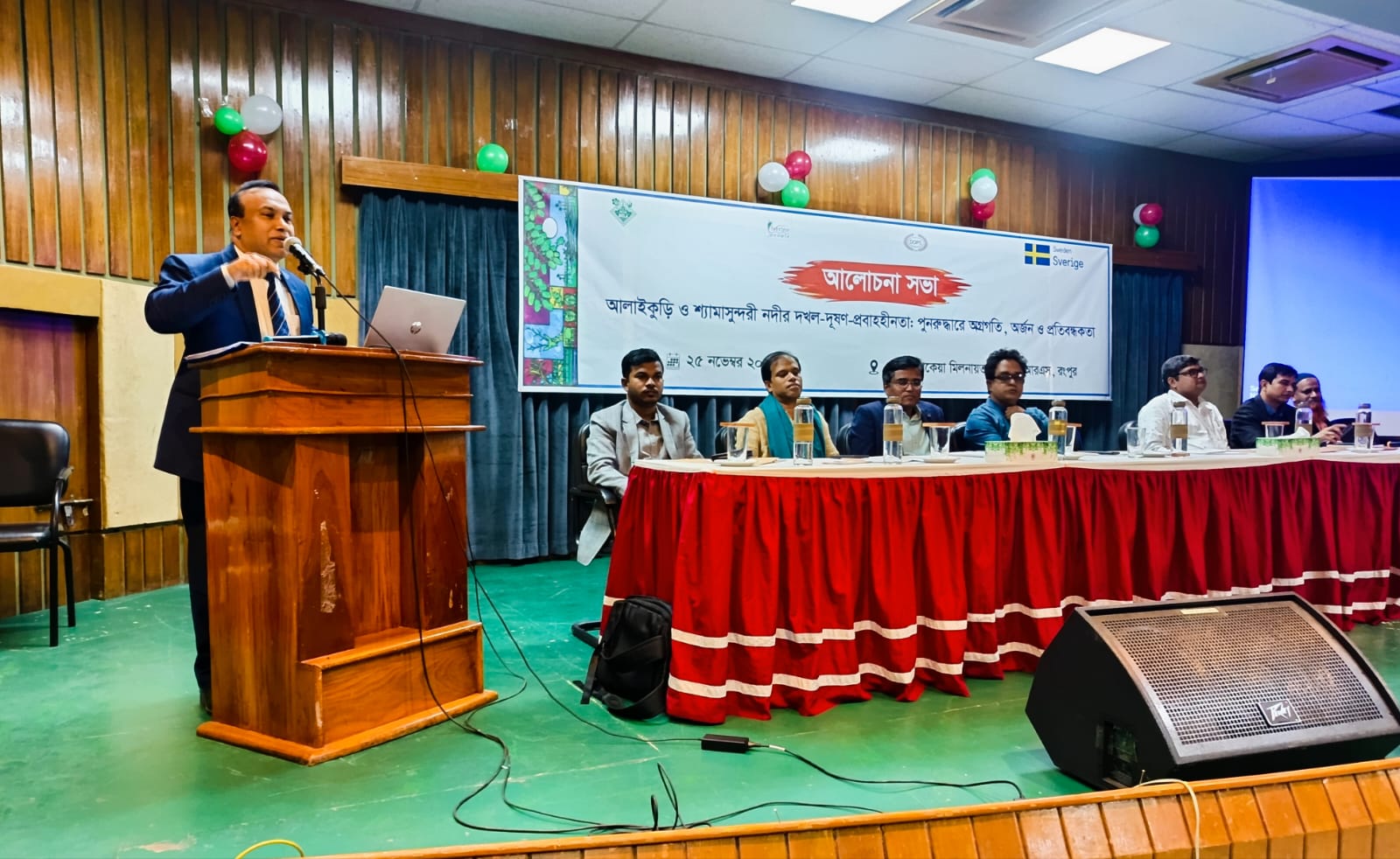
These demands were raised at a discussion meeting held on Wednesday noon, November 25, 2026, at the RDRS Auditorium in Rangpur city. Bangladesh Environmental Lawyers Association (BELA), Riverine People, and DOPS Foundation jointly organized the event titled "Encroachment, Pollution, and Stagnation of Alaikuri River and Shyamasundari Canal: Progress, Achievements, and Obstacles in Restoration."
Budget Breakdown, Encroachment Questions & Keynote Insights
According to figures presented at the meeting, 14 crore taka has been allocated for restoring Shyamasundari Canal and 30 crore taka for Alaikuri River. Participants demanded public disclosure of sector-wise expenditure, tender processes, volume of work, and implementation timelines for both projects, while calling for an independent supervision mechanism to ensure work quality.
The discussion also raised questions regarding the responsibilities of the district administration, Water Development Board (BWDB), and City Corporation in evicting illegal encroachments, demarcating the true boundaries of the river and canal, and preventing re-encroachment. Speakers further called for effective waste management and drainage plans to stop household and institutional waste and sewer water from entering the canal.
Keynote discussant Dr. Tuhin Wadud said prolonged encroachment, pollution, unplanned infrastructure construction, and navigability crises have threatened the existence of both waterways. Stressing that dredging alone is insufficient, he said boundary demarcation, eviction of illegal encroachers, stopping pollution, and ensuring natural water flow must be achieved, requiring responsible roles from civil society alongside government agencies.
 Read next18 Teenagers Held in Joint DB and Police Crackdown in Hossainpur
Official Perspectives & Formation of Citizen Monitoring Committee
Chief guest Abu Jafar, Director of the Local Government Division at the Rangpur Divisional Commissioner's Office, emphasized inter-agency coordination and effective implementation of plans. Dr. Sarfaraz Banda, Additional Chief Engineer (Northern Region) of the Water Development Board, highlighted the need for planned technical management to restore natural flow and water-retention capacity.
Engineer Md. Hafizul Haque gave a presentation on project activities and progress, while Umar Faruk, Associate Professor of the Department of Accounting and Information Systems at Begum Rokeya University, presided over the meeting.
On behalf of citizen representatives, a citizen committee was announced to monitor project progress, work quality, and implementation status by collecting project information, observing activities, and drawing the attention of relevant authorities as needed. Speakers emphasized that restoration responsibilities do not end upon project completion, requiring long-term maintenance, pollution control, and anti-encroachment measures involving both public institutions and civil society.
During the open discussion session, DOPS Executive Director Ujjal Kumar Chakraborty, media worker and organizer Marina Lovely, Environment Protection Forum Member Secretary Farhaduzzaman Faruk, women's rights activist Samse Ara Bilkis, and human rights activist Advocate Afroza Sharmin Kona, among representatives of various organizations, also spoke.
— Daily Best News Desk • Fearless in the search for truth
Reported by Rangpur Bureau • Edited by the Daily Best News desk. Send corrections to [email protected].