**
Environmentalists and representatives of civil society have demanded a coordinated initiative, transparency in project implementation, and long-term management to resolve encroachment, pollution, and lack of water flow in Rangpur's Alaikuri River and Shymasundari Canal.**
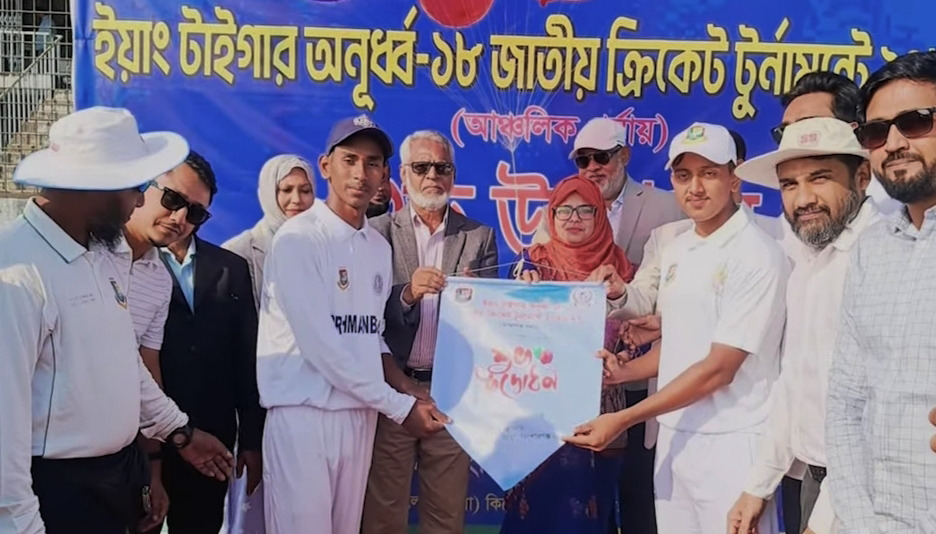
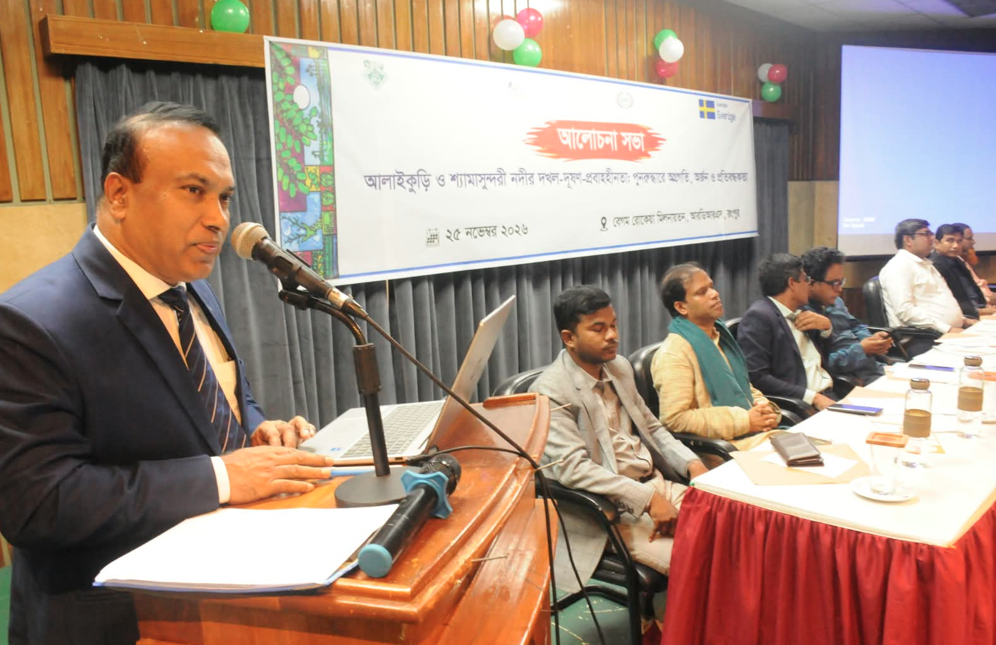
The demand was raised at a discussion meeting titled "Encroachment, Pollution, and Lack of Flow of Alaikuri River and Shymasundari Canal: Progress, Achievements, and Obstacles in Restoration," held on Wednesday (November 25) noon at the RDRS Auditorium in Rangpur city.
**
Jointly organized by the Bangladesh Environmental Lawyers Association (BELA), Riverine People, and DOPS Foundation, the meeting was chaired by Umar Faruk, Associate Professor of the Department of Accounting and Information Systems at Begum Rokeya University.**
Khairul Islam Palash, Assistant Professor of the Bangla Department at Begum Rokeya University, delivered the welcome speech, while BELA's Rangpur and Rajshahi Divisional Coordinator Tanmay Kumar Sanyal moderated the session.
Abu Jafor, Director of the Local Government Division (Joint Secretary) at the Office of the Rangpur Divisional Commissioner, attended as the chief guest. Special guests included Dr. Sarfaraz Banda, Additional Chief Engineer for the Northern Region of the Bangladesh Water Development Board (BWDB), and Superintending Engineer Md. Ahsan Habib.
Nazrul Islam, Urban Planner of Rangpur City Corporation, and Tarun Kumar Sarkar, Senior Assistant Engineer of LGED, spoke as honored guests. Dr. Tuhin Wadud, Professor of the Bangla Department at Begum Rokeya University and Director of Riverine People, was the keynote speaker. Engineer Md. Hafizul Islam presented a PowerPoint overview of the project's progress and activities.
Keynote speaker Dr. Tuhin Wadud said that prolonged encroachment, pollution, unplanned infrastructure construction, and navigability crises have threatened the existence of the two waterways. Rather than excavation alone, river boundaries must be demarcated, illegal encroachments evicted, pollution stopped, and natural water flow ensured. Alongside government institutions, civil society must also play a responsible role in this effort.
Chief guest Abu Jafor emphasized coordination among relevant government departments and the effective implementation of adopted plans for river restoration. Dr. Sarfaraz Banda highlighted the need for planned technical management to restore the natural flow and water-holding capacity of the rivers. Engineer Md. Ahsan Habib stressed proper project implementation, maintenance, and clearly defining the responsibilities of the relevant agencies.
 Read next18 Teenagers Held in Joint DB and Police Crackdown in Hossainpur
Engineer Md. Hafizul Islam presented the various activities and implementation progress of the project. Urban planner Nazrul Islam noted that river conservation is vital for planned urbanization, waterlogging mitigation, and maintaining environmental balance, while LGED engineer Tarun Kumar Sarkar highlighted the need for effective coordination among concerned institutions in river restoration.
In his presidential remarks, Associate Professor Umar Faruk said that protecting rivers is not the responsibility of a single institution or department alone, but a collective social responsibility, urging all stakeholders to work together to save the two waterways.
Questions over project allocation and implementation: According to information presented at the meeting, Tk 14 crore has been allocated for the restoration of Shymasundari Canal and Tk 30 crore for the restoration of Alaikuri River. Participants wanted to know what specific works will be carried out under these projects, how much of the river and canal will be excavated or restored, and what the implementation timeline is.
Questions were also raised about the roles of the district administration, Water Development Board, and City Corporation in evicting illegal encroachments along the canal, determining true boundaries, and preventing re-encroachment. Inquiries were also made regarding the City Corporation's waste management, drainage, and sewerage plans to stop household and institutional waste as well as drain water from entering the canal.
Regarding Alaikuri River, civil society representatives asked what measures will be taken to conduct surveys to identify illegal encroachments and filling, clear encroachments, ensure natural water flow, and conserve river fish, aquatic plants, and biodiversity.
In addition, demands were made to publicly disclose sector-wise expenditure, tender processes, and work progress for the combined Tk 44 crore of the two projects, and to establish an independent monitoring system to ensure quality of work. Questions were also raised about which institution will handle regular maintenance, pollution control, and encroachment prevention after the projects conclude.
Formation of citizen monitoring committee: At the meeting, civil society representatives announced a citizen committee to monitor the progress, quality of work, and implementation status of the Alaikuri River and Shymasundari Canal restoration projects. The committee will oversee project activities, collect information, and draw the attention of relevant authorities as needed.
Speakers at the meeting said restoration efforts must not be limited to taking up projects and excavating alone; clearing encroachments and pollution, restoring natural flow, ensuring project transparency and accountability, and guaranteeing long-term maintenance must be secured. They stressed a coordinated initiative by government institutions, local administration, the City Corporation, and civil society.
During the open discussion session, others who spoke included DOPS Executive Director Ujjal Kumar Chakraborty, media worker and organizer Marina Lovely, Environment Protection Forum Member Secretary Farhaduzzaman Faruk, women's rights activist Samse Ara Bilkis, and human rights activist Advocate Afroza Sharmin Kona, along with representatives of various organizations.
— Daily Best News Desk • Fearless in the search for truth
Reported by Farhaduzzaman Faruk, Rangpur Bureau • Edited by the Daily Best News desk. Send corrections to [email protected].