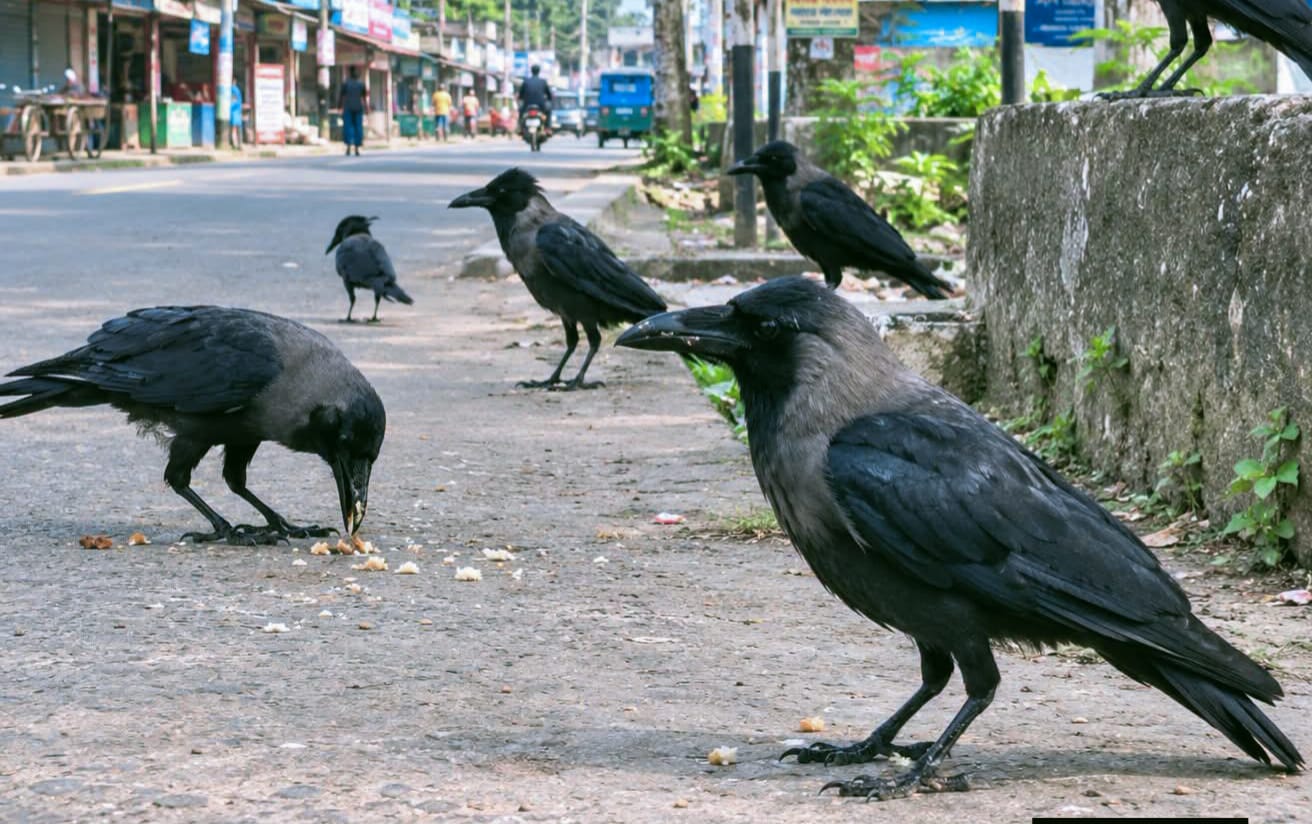
Once upon a time, early mornings in Pirganj town were defined by the cawing of crows, while lazy summer afternoons echoed with their distinct, harsh "caw-caw." From rooftops and window cornices to electric wires and trash bins, crows were ubiquitous. However, as the town's landscape has transformed over time, the familiar presence of these urban birds seems to be rapidly diminishing.
For local residents, memories of waking up to the sound of crows remain vivid. Whether preparing for school in the morning or spending a quiet afternoon by the window during summer vacations, the cawing of crows was inextricably tied to daily life. Though occasionally annoying, it was an integral part of the urban environment.
In the past, leftover food on rooftops or in courtyards would instantly attract flocks of crows. They also played a vital role in keeping the environment clean by consuming organic waste and food scraps, maintaining a natural coexistence with human habitats.
Locals now observe that the presence and calls of crows have noticeably dwindled in many parts of Pirganj. This decline has sparked conversations regarding the impacts of urban changes on local wildlife.
Environmentalists and residents point to several factors contributing to the decline: changing residential architecture, the rise of high-rise buildings, loss of green cover, and shrinking open spaces. Old banyan, peepal, and albizia trees—which historically served as essential nesting and roosting spots for crows—are disappearing, severely restricting their breeding grounds. Furthermore, shifts in waste management practices and overall urban environmental changes have altered their feeding habits and movement. However, verifying the exact scale and primary drivers of this decline requires structured local observation and scientific studies.
For many in Pirganj, the crow is not merely a bird, but a symbol of childhood nostalgia—reminding them of a mother's morning call to wake up, the rush to school, or idle summer breaks. While mornings still break and evenings still fall over the town, the sounds of nature are increasingly replaced by vehicle horns and modern machinery.
Local environmental enthusiasts emphasize the urgent need to protect urban trees, prevent indiscriminate deforestation, and ensure eco-friendly urbanization. Preserving safe natural habitats for birds and urban wildlife is essential to maintaining the delicate ecological balance and connection between city dwellers and nature.
— Daily Best News Desk • Fearless in the search for truth
Reported by Thakurgaon Correspondent • Edited by the Daily Best News desk. Send corrections to [email protected].