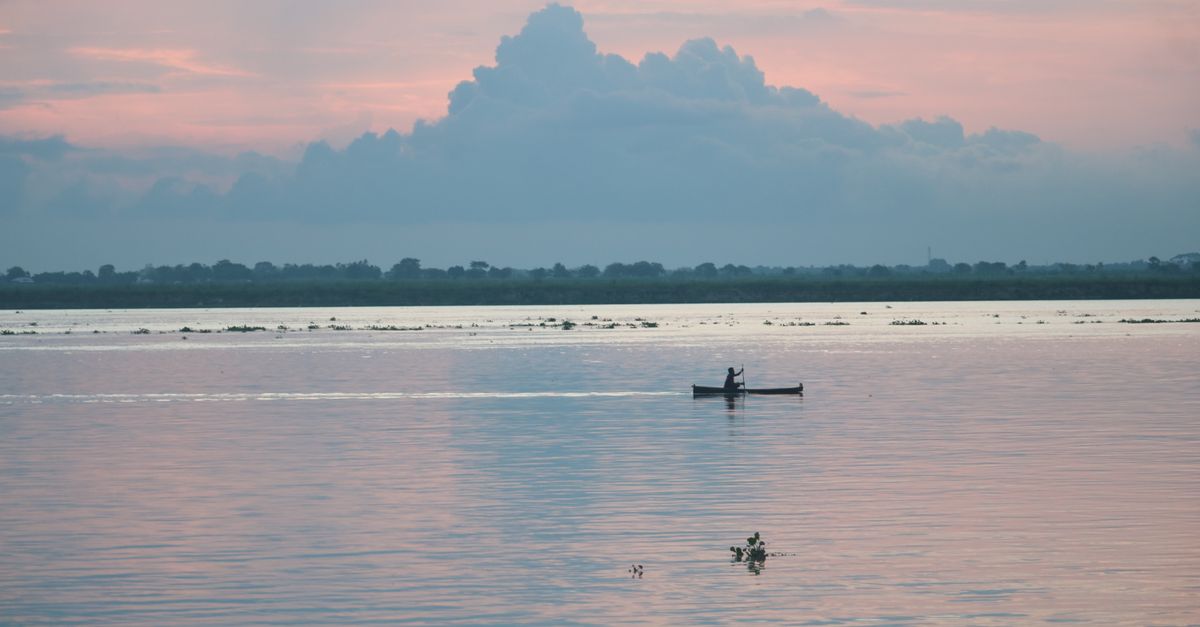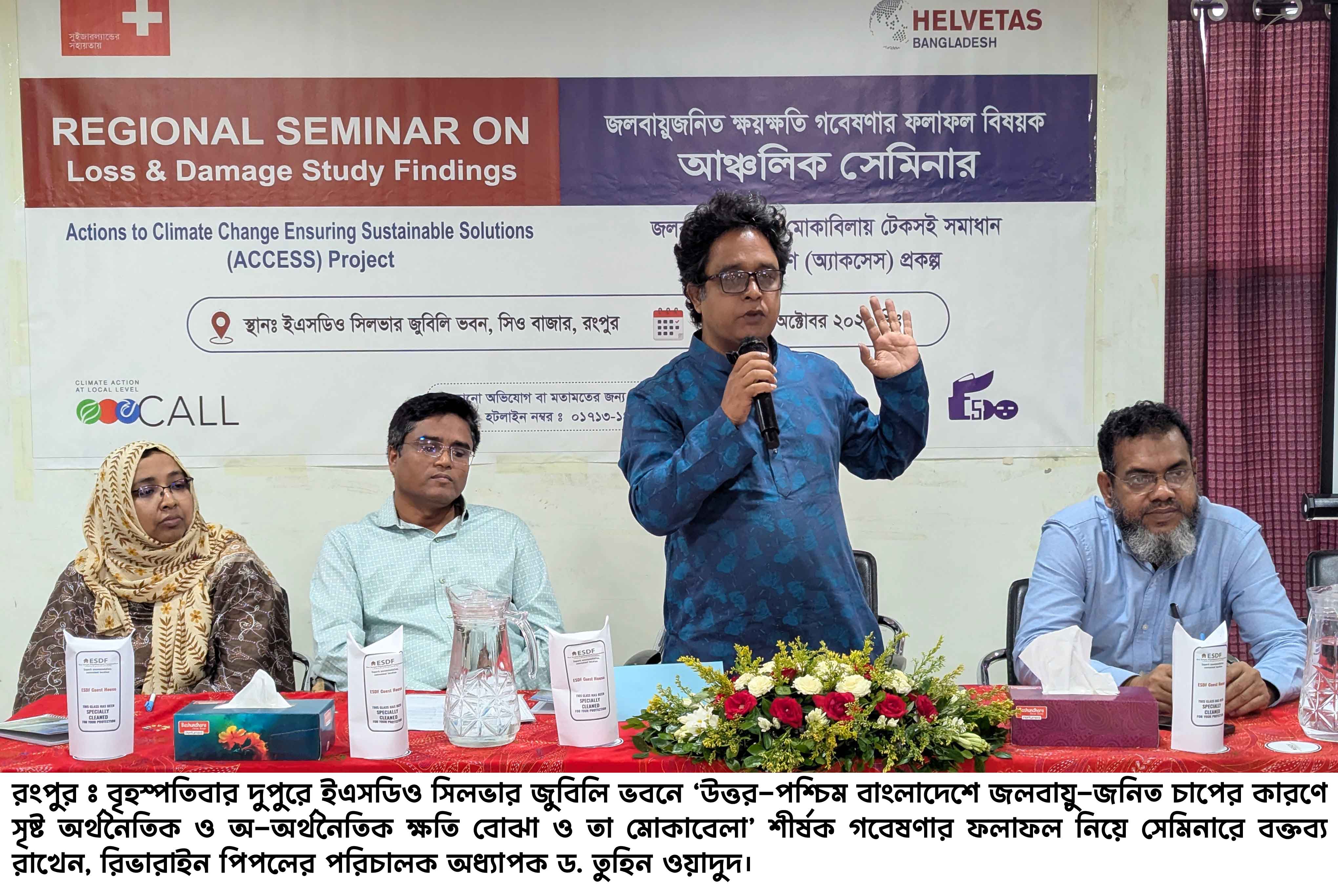
Experts at a seminar on Thursday (October 8, 2026) pointed out that non-economic losses caused by the impacts of climate change in the Rangpur region remain largely overlooked, forcing affected families to bear lifelong burdens across vital sectors such as education, healthcare, physical and mental well-being, and water and sanitation. Speaking at the research findings dissemination seminar titled "Understanding and Addressing Economic and Non-Economic Losses and Damages Caused by Climate-Induced Pressures in North-West Bangladesh," held at the ESDO Silver Jubilee Building in Rangpur, researcher Professor Dr. Atikul Islam from Khulna University’s Environmental Science Department shared data from a study covering 277 families across six unions in Kurigram Sadar, Nageshwari, and Ulipur upazilas. The research revealed that over the past decade, disasters like floods, droughts, river erosion, cold waves, and heatwaves severely damaged infrastructure, crops, and livestock, while non-economic impacts left 72 percent struggling with communication disruptions, 61 percent with education setbacks, 58 percent with healthcare challenges, 47 percent with physical and mental health issues, and 49 percent with safe water and sanitation crises, pushing vulnerable households into a cycle of poverty. The seminar was addressed by prominent figures including Riverine People Director Professor Dr.
Tuhin Wadud, Water Development Board Superintending Engineer Ahsan Habib, and Department of Environment Director Nur Alam, and was jointly moderated by ESDO Access Project Manager Golam Faruq and Helvetas Bangladesh Localization and Partnership Coordinator Ayatullah Al-Mamun.
— Daily Best News Desk • Fearless in the search for truth
Reported by Rangpur Bureau • Edited by the Daily Best News desk. Send corrections to [email protected].