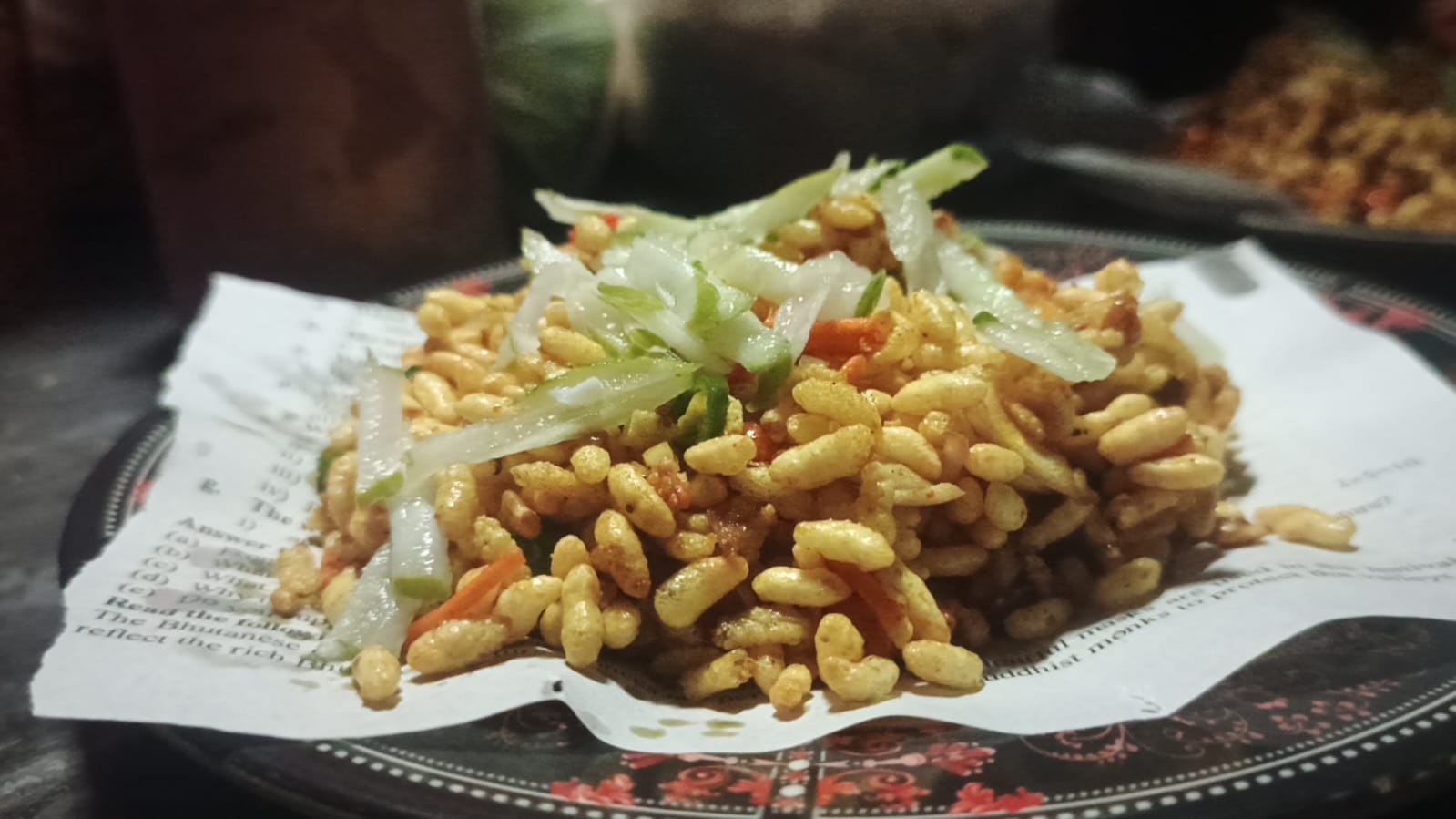
Nilphamari Correspondent: People's attraction to mouth-watering street foods like jhalmuri, peyaju, beguni, and hot singara remains consistently high, with people of all ages crowding small food stalls and footpaths every day. However, behind the delicious taste and aroma lies a concerning picture for public health. Old newspapers, book pages, notebook pages, and other printed papers are widely used to serve, wrap, and absorb excess oil from these foods. Driven by accessibility and low cost, this long-standing habit is now raising serious questions about food safety.
Across various markets, footpaths, and food shops in Nilphamari, it was observed that newspapers and notebook pages are regularly used to serve items like jhalmuri, chhola, peyaju, beguni, singara, puri, jilapi, paratha, phuchka, achar, and amra. Often, hot and oily foods come into direct contact with printing ink, while the storage conditions of these papers remain unknown. Experts note that printing inks contain various pigments, dyes, binders, solvents, and sometimes heavy metals like lead, cadmium, chromium, and arsenic. According to a 2026 study in Bangladesh on paper food wrappers, varying levels of heavy metals were detected, indicating that old printed papers are unsafe for food contact.
Dr. Md. Abdul Matin, Junior Consultant at the Medicine Department of Nilphamari 250-Bed General Hospital, stated that harmful chemicals in newspaper ink can transfer to warm, wet, or oily foods, leading to long-term health risks. Furthermore, germs from old and unclean papers can cause gastrointestinal and digestive infections. While small-scale vendors like Raju Ahmed in Syedpur cite financial constraints and the high cost of food-grade alternatives as a challenge, conscious vendors like hotel owner Md. Alamgir Hossain Babu have shifted to using tissues after learning about the hazards. Nilphamari District Safe Food Officer Md. Shihab Uddin emphasized that under the Safe Food Act, 2013, punitive measures exist for violating health regulations, and called for regular monitoring, vendor training, and consumer awareness to eradicate this practice.
— Daily Best News Desk • Fearless in the search for truth
Reported by Nur Alam Babu, Nilphamari Correspondent • Edited by the Daily Best News desk. Send corrections to [email protected].