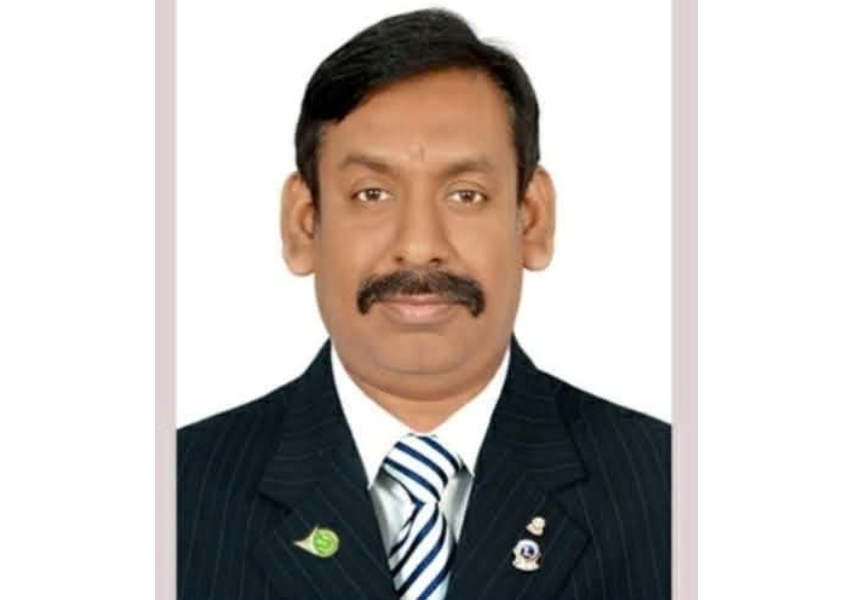
Lion Md. Gani Miah Babul: Road accidents have a profound impact on public health, the economy, and national development. Every loss of life is an irreparable loss, plunging every seriously injured person and their family into long-term uncertainty. National Road Safety Day cannot simply be a day for formalities or awareness slogans. This day should serve as an occasion to review the road system, law enforcement, vehicle standards, driver training, emergency medical care, and the accountability of related institutions anew.
The history of Nirapad Sarak Chai (NISCHA) reminds us how personal grief can transform into a national social movement. On October 22, 1993, Jahanara Kanchan, wife of film actor Ilias Kanchan, lost her life in a tragic road accident. Following her death, actor Ilias Kanchan initiated efforts to prevent road accidents and build public awareness. On December 1 of that year, NISCHA was officially established. October 22 marks the death anniversary of Jahanara Kanchan. To bring the demand for safe roads into the public sphere around her memory, the day has been observed as National Road Safety Day by NISCHA since 1994. At NISCHA's request, the government declared October 22 as National Road Safety Day in 2017, and since then, the day has been observed through various government and non-governmental programs. The declaration in official documents serves not only to commemorate the day's significance but also to call for practical steps to prevent accidents, honoring those killed and injured on the roads.
Road accidents are often dismissed as "misfortune," despite being driven by identifiable and controllable risks such as speeding, reckless driving, tired or unqualified drivers, unsafe vehicles, lack of safe pedestrian crossings, poor road design and maintenance, and delayed post-accident medical care. The World Health Organization's "Safe System Approach" acknowledges this reality: humans make mistakes, but those mistakes must not result in death or serious injury, requiring the entire transport system to be made safe. Under this perspective, responsibility cannot be placed solely on the driver or pedestrian; everyone involved in road planning, vehicle manufacturing, public transport operation, traffic law enforcement, and post-accident medical care shares the responsibility.
The Road Transport Act 2018 serves as an important legal foundation for road safety in Bangladesh, but legislation alone does not make roads safe. Effective law enforcement, necessary rules, institutional capacity, and regular monitoring must be ensured. If bias, irregularities, or a culture of avoiding accountability persist in law enforcement, messages of public awareness are weakened. Accident investigations must look beyond blaming drivers to examine road design, vehicle conditions, transport company monitoring, traffic management, and rescue services.
Expanding the use of technology in road safety is the need of the hour. Initiatives have been taken at several key intersections in Dhaka to detect traffic violations using AI-based cameras, which can help curb speeding, signal violations, and risky behavior. However, for technology to be effective, camera data verification, transparent fine and appeal procedures, and consistent enforcement are essential. Furthermore, relocating inter-district bus terminals outside city areas to ease traffic congestion in Dhaka must be implemented thoughtfully, ensuring passenger convenience, reliable public transport connections, and synchronized timetables to avoid adding to commuter suffering.
Comprehensive efforts are needed across safe infrastructure, speed management, safe vehicles, road users, and post-accident services. Footpaths, safe crossings, cycling lanes, bus stops, streetlights, and clear signage must be provided, with speed-calming measures near schools, hospitals, markets, and residential areas. Routine safety audits of older roads are necessary to fix accident-prone spots, while fitness checks for vehicles must go beyond paperwork to crack down on faulty brakes, overloaded goods, and missing safety gear. Driver licensing must verify skills and training, and professional working hours and rest rules must be enforced. Rapid rescue and medical care following accidents are integral to road safety.
Coordinating emergency helplines, ambulances, trained first aid, and nearby medical facilities can save lives, requiring effective communication among police, fire services, health departments, hospitals, and local administrations. Establishing an integrated road safety database is also crucial, where data from police, hospitals, ambulances, fire services, BRTA, road authorities, and insurance companies can be analyzed to make evidence-based budget and infrastructure investments.
International experiences, such as Sweden's "Vision Zero" policy and the Netherlands' pedestrian-friendly infrastructure, demonstrate that long-term commitment, safe design, data analysis, and fair law enforcement can reduce fatalities. Road safety is also directly tied to Sustainable Development Goals (SDGs)—specifically Target 3.6 on reducing road traffic deaths and injuries and Target 11.2 on safe and sustainable transport systems, alongside the UN Decade of Action for Road Safety 2021–2030 goal to cut road deaths and injuries by at least 50% by 2030.
Ultimately, road safety is not solely the responsibility of the state, nor can the state shift all blame to citizens. Transport owners, labor unions, drivers, engineers, doctors, media, civil society, and the general public must make a combined effort. With government leadership, clear responsibilities, adequate funding, and societal cooperation, building safe roads means ensuring safe lives, making sincerity and collective effort indispensable to preventing road accidents.
Lion Md. Gani Miah Babul (Teacher, Poet, Columnist, Social Worker, and Organizer) Founder President, Bangladesh Government Secondary School Association (Agriculture) Central Committee Joint Secretary General, Nirapad Sarak Chai (NISCHA) Central Committee Phone: 01552631118, 01842631118 Email: [email protected]
— Daily Best News Desk • Fearless in the search for truth
Reported by Editorial Desk • Edited by the Daily Best News desk. Send corrections to [email protected].