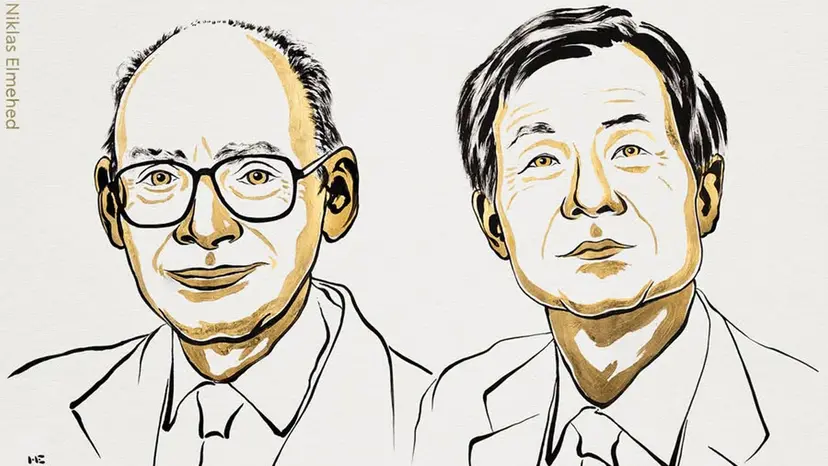
French chemist Henri Kagan and Japanese chemist Kensoso Soai have been awarded the 2026 Nobel Prize in Chemistry for their groundbreaking discoveries in non-linear effects in asymmetric synthesis and asymmetric autocatalysis.
The Royal Swedish Academy of Sciences announced the joint award in Stockholm on Wednesday (October 7, 2026), recognizing the duo for resolving a longstanding chemical mystery surrounding how life's molecular homochirality originated. Many essential biomolecules—such as amino acids—exist in two mirror-image forms (enantiomers), yet living cells utilize only one specific variant while virtually excluding its mirror image. In 1986, Henri Kagan pioneered methods introducing non-linear effects to control mirror-image proportions in chemical reactions beyond conventional expectations. Building on these principles in 1995 and concluding with definitive proofs in 2003, Kensoso Soai created self-replicating chemical systems capable of generating absolute homochirality without biological intervention. Their discoveries provided fundamental insights into the chemical origins of life and revolutionized asymmetric synthesis in modern pharmaceutical manufacturing.
— Daily Best News Desk • Fearless in the search for truth
Reported by International Desk • Edited by the Daily Best News desk. Send corrections to [email protected].