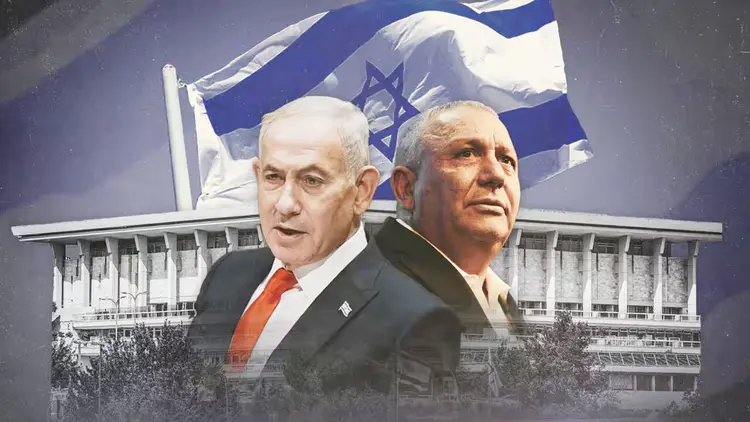
With over
90% of ballots counted
in Israel's parliamentary elections, the country faces a major political deadlock as neither Prime Minister
Benjamin Netanyahu
nor opposition leader
Gadi Eisenkot
has secured the
61-seat majority
required to form a government in the 120-member Knesset.
According to updated election tallies from the Central Elections Committee (CEC), Netanyahu's right-wing and ultra-Orthodox bloc currently holds 53 seats, a drop from his coalition's previous 68-seat majority. Meanwhile, the main opposition bloc led by former military chief Gadi Eisenkot (Yashar!) holds 48 seats. The Arab-led parties—comprising the Joint List and Ra'am—achieved a historic high, securing 19 seats. While a combined opposition and Arab-party total equals 67 seats, forming a working coalition remains highly complex due to deep ideological divides and reluctance among right-leaning Zionist parties to enter a coalition reliant on Arab support.
Under Israeli constitutional law, if party leaders fail to forge a 61-seat coalition within 42 days of being assigned the presidential mandate, parliament will dissolve, triggering snap elections. Throughout any extended negotiation phase or subsequent election cycle, Benjamin Netanyahu will remain in office as caretaker Prime Minister. Legal experts at the Israel Democracy Institute affirm that caretaker governments possess broad executive authority, including crucial national security and regional conflict decisions. Official certified results are slated for announcement by November 4, followed by the swearing-in of the 26th Knesset on November 10, 2026.
— Daily Best News Desk • Fearless in the search for truth
Reported by International Desk • Edited by the Daily Best News desk. Send corrections to [email protected].