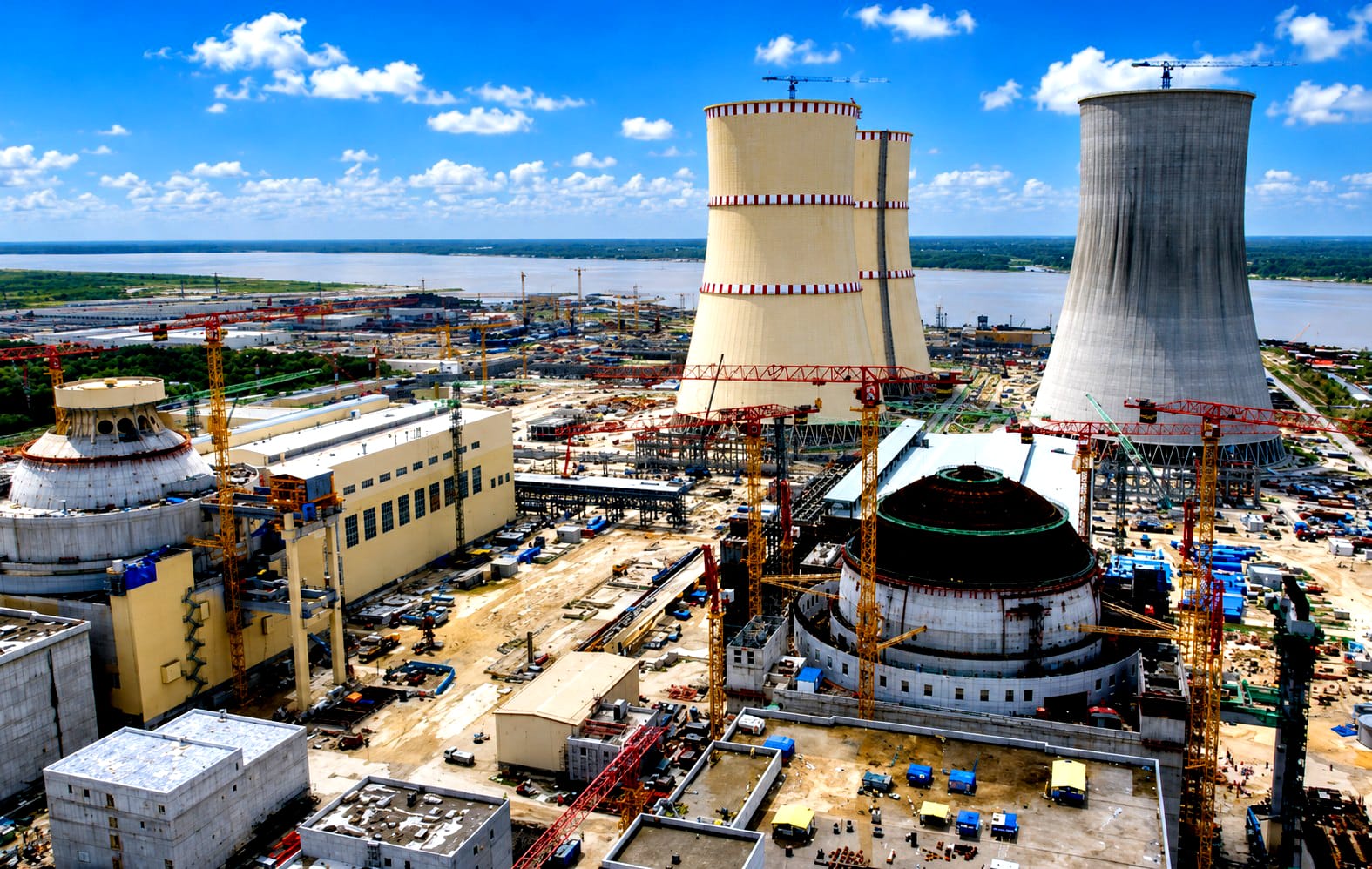
Another significant milestone has been achieved toward power generation and national grid supply from the first unit of the Rooppur Nuclear Power Plant.
Following the completion of essential physical startup testing and evaluations, the Bangladesh Atomic Energy Regulatory Authority (BAERA) has now granted approval to initiate the "Stage-C" or power startup operations.
This development creates opportunities to advance preparations for step-by-step capacity escalation of the reactor, electricity generation, and trial power supply to the national grid within the first unit.
The confirmation of this approval came on Thursday (October 29) evening from Dr. Md. Zahedul Hasan, Managing Director of Nuclear Power Plant Company Bangladesh Limited (NPCBL).
He stated that BAERA Chairman M. Mahmudul Hasan granted the necessary permissions to commence power startup operations at the first unit of the Rooppur Nuclear Power Plant.
Project-related insiders noted that with this approval, a vital regulatory compliance step regarding entry into the power startup phase of the first unit has been completed. If necessary testing and commissioning activities proceed according to plan, experimental electricity supply to the national grid is expected to commence next month.
Relevant sources reported that required tests and activities, including the Phase-B2 physics tests of the first unit, have already been completed. Following the submission of these test reports to BAERA, approval to launch Stage-C activities was secured.
NPCBL Managing Director Dr. Zahedul Hasan stated that having crossed the physical startup phase, the plant is now entering the power startup stage. BAERA has issued trial operational approval to the plant's operating agency to conduct activities in this phase.
He explained that during the Stage-C or power startup phase, the functionality of the reactor, primary and secondary coolant systems, turbine-generators, electrical systems, machinery and control systems, as well as safety and security systems, will be continuously tested. The mutual coordination and seamless functioning of these systems will also be verified. The primary objective of this stage is to ensure the safe, stable, and reliable operation of the plant alongside testing its capacity for trial power supply to the national grid.
Dr. Zahedul Hasan further noted that in this phase, along with gradually increasing reactor power, the performance of key plant machinery and systems will be monitored. Specifically, tests will verify whether turbine control and safety systems, generators, and associated electrical equipment operate properly under normal operating conditions.
 Read nextSRB Raids Residential House in Chhagalnaiya: Drug Dealer Arrested with 40 kg Hemp
Ensuring coordination among the reactor, turbine, and safety systems throughout the process is paramount. Concurrently, necessary coordination must be maintained among BAERA, the Ministry of Science and Technology, national power grid operation agencies, and institutions involved in security, law enforcement, and nuclear emergency management.
A crucial milestone of the Stage-C phase involves connecting the generator to the national electricity grid. This process will verify stable power delivery capabilities while maintaining coordination with the grid, alongside scaling up reactor power and testing system functionalities.
Project sources indicated that testing will begin initially at a low reactor capacity, with power being increased progressively based on test results and technical evaluations. Experimental power supply to the national grid could commence once the thermal capacity of the reactor reaches 30 to 35 percent, according to concerned sources.
Expectations among stakeholders are that upon successful completion of required testing, the first unit could supply at least 300 megawatts of electricity to the national grid within December of this year. However, this timeline will depend on test outcomes, commissioning progress, and fulfillment of conditions set by the regulatory authority.
Officials clarified that completing Stage-C tests, initiating trial grid supplies, and achieving commercial production represent three distinct milestones. Before entering commercial production, mandatory technical tests, commissioning activities, and all regulatory preconditions must be satisfied. Consequently, receiving power startup approval does not equate to the immediate commencement of commercial production. Testing to verify system performance will continue even after trial power supplies to the national grid begin.
The Rooppur Nuclear Power Plant comprises two units, each with a production capacity of 1,200 megawatts. When both units operate at full capacity, the plant's total generation capacity will reach 2,400 megawatts.
Launching this plant will enhance the nation's power generation capacity, reinforce energy security, and mark a significant advancement in acquiring expertise in nuclear technology. Once commercial nuclear power production begins, Bangladesh will join the roster of commercial nuclear power-producing nations globally.
The Rooppur Nuclear Power Plant is being constructed using Generation 3+ technology, recognized as one of the finest and most modern technologies worldwide. Designed according to specifications, the operational lifespan of Bangladesh's first nuclear power plant is set at 60 years.
The original project duration was slated until December 2025. Following two extensions, the timeframe has been pushed to June 2028. According to project data, escalation in the exchange rate of the US dollar and other financial factors have driven up project costs. Currently, the total cost of the project is estimated at Tk 1,38,686 crore.
— Daily Best News Desk • Fearless in the search for truth
Reported by Rooppur Nu M. S. Rahman, Staff Reporter. Pabna • Edited by the Daily Best News desk. Send corrections to [email protected].