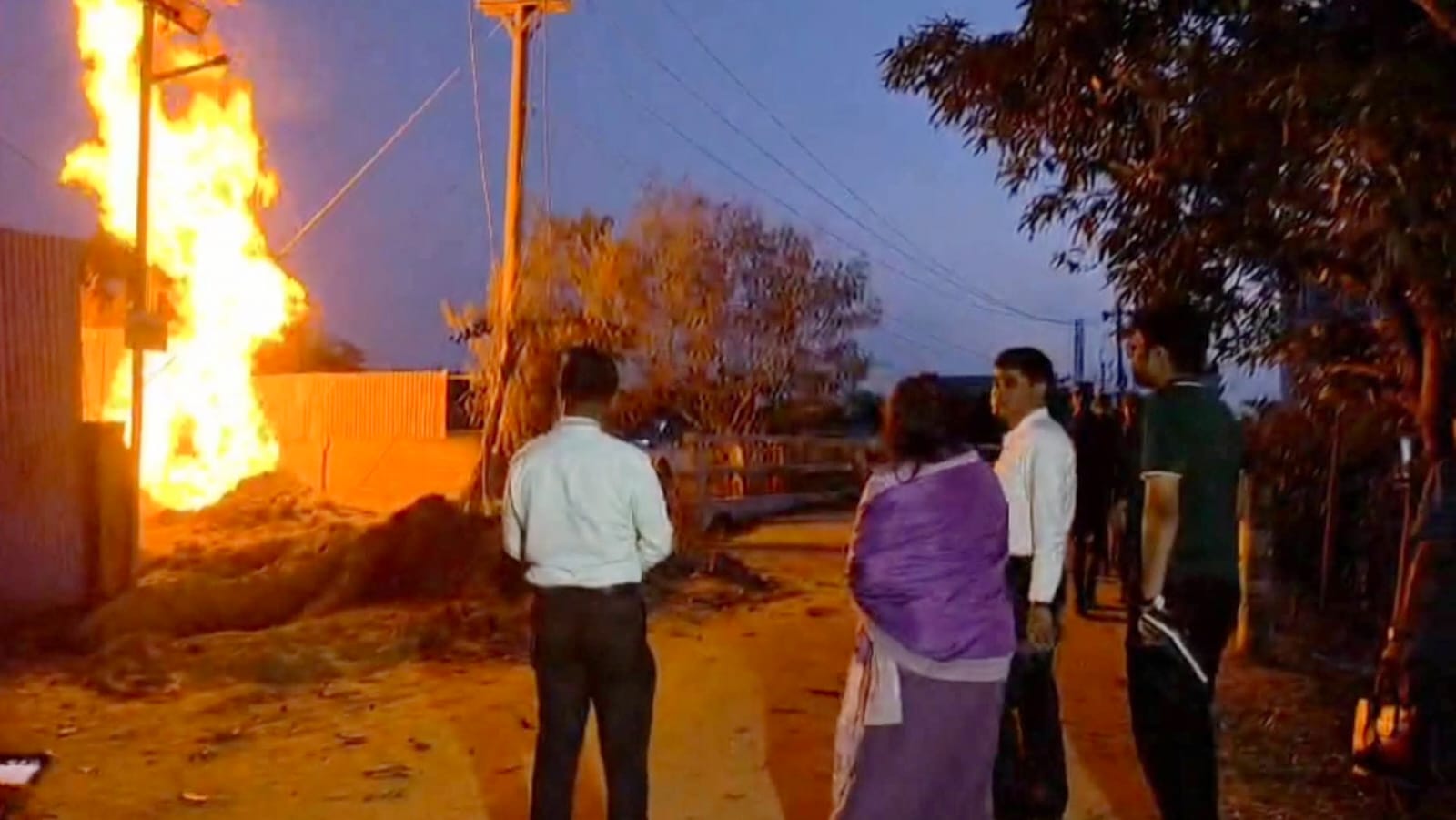
The fire ignited by underground gas escaping during tubewell installation at Inani in Ukhia, Cox's Bazar, has not been brought under control even on its fifth day. A high-level delegation from Bangladesh Petroleum Exploration and Production Company Limited (BAPEX) and Bangladesh Oil, Gas and Mineral Corporation (Petrobangla) inspected the site to assess the situation. Experts are initially considering the possibility of a shallow gas reserve in the area. However, the nature of the gas, the size of the reserve, and whether it is commercially viable for extraction remain unconfirmed.
Concerned officials stated that the gas flow and fire conditions will be monitored for the next 15 days. If the gas flow diminishes during this period, the fire may extinguish naturally. Otherwise, necessary measures will be taken to control the gas emission based on expert recommendations. They warned that attempting to forcibly extinguish the fire or obstruct the gas flow path could carry severe risks.
In the interest of public safety, Ukhia Upazila Nirbahi Officer (UNO) and Executive Magistrate Panna Akter has imposed Section 144 within a 200-meter radius around the source of the fire. The entry and presence of the general public in that area have been strictly prohibited. Activities that could generate sparks—including lighting fires, smoking, and using matches or lighters—are also banned. However, locals reported that despite the prohibition, curious crowds continue to gather at the site every day.
Gas Flow Under 15-Day Observation
Engr. Md. Shoaib, Director (Operations and Mines) of Petrobangla, informed that the matter was reviewed in an emergency meeting involving current officials from BAPEX and Petrobangla, alongside retired geological experts. Initial assumptions suggest that the emitted gas could be thermogenic or biogenic in nature. Based on the color of the flame, experts are also considering the possibility of liquid oil or condensate being mixed with the gas.
He stated that gas reserves in the country are typically found at depths of 1.5 to 5 kilometers underground. However, in the case of Inani, there is a possibility of a shallow gas reserve. To gain a clear understanding of the true source and reserve, the height of the flame and gas pressure will be observed over the next 15 days.
If the intensity of the fire remains unchanged or increases during this period, capping the gas release by drilling a "relief well" using side-tracking technology will be considered. If the gas flow naturally decreases or ceases, subsequent steps will be taken based on the situation.
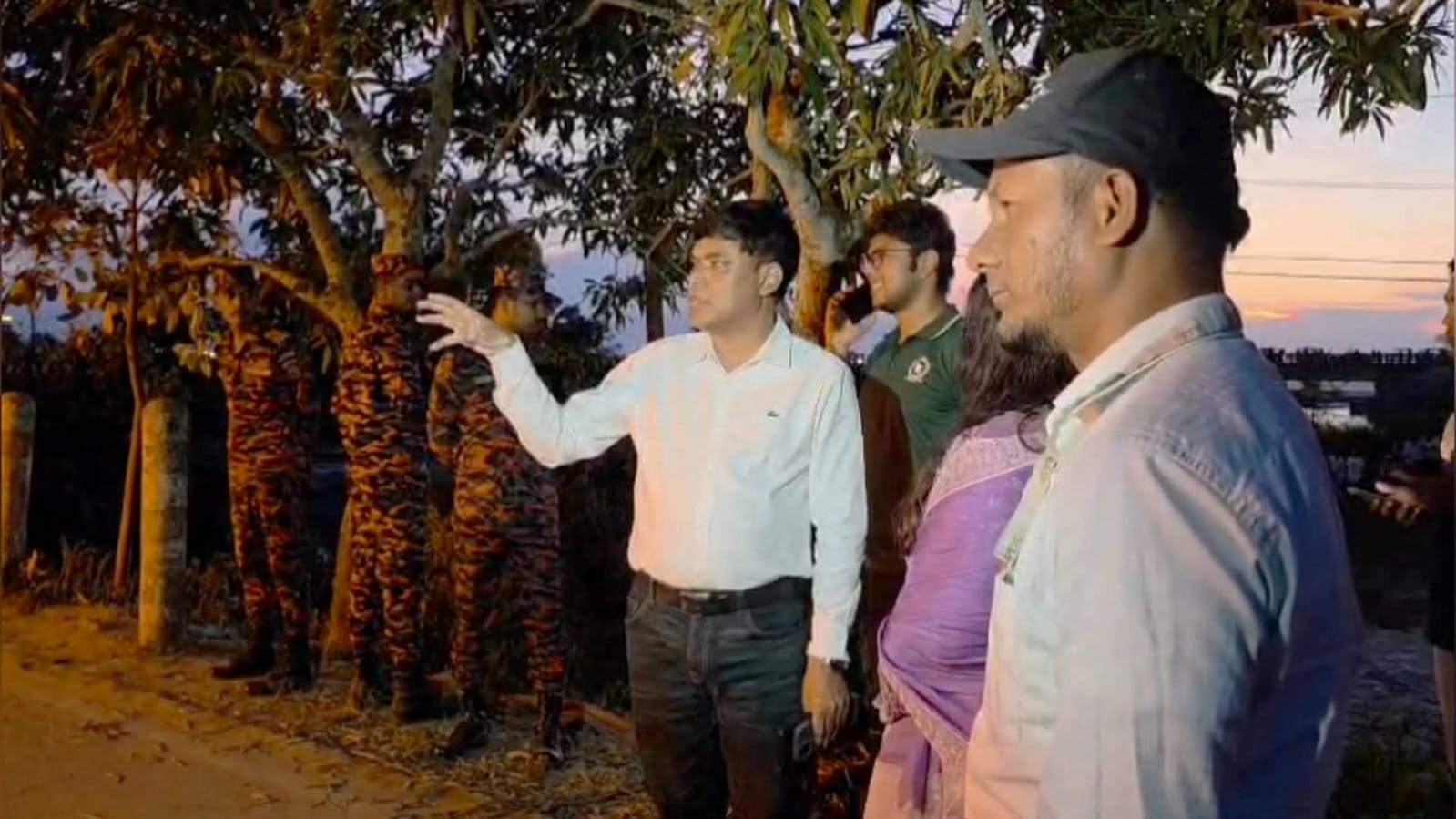
The Petrobangla official added that due to geological shifts, gas is also escaping and burning from several surrounding strata. Once the situation is stabilized, BAPEX plans to conduct a three-dimensional (3D) seismic survey in the region. If commercially extractable gas reserves are confirmed during the survey, drilling a full-fledged production well will also be considered.
Shamsia Muktadir, General Manager of BAPEX's Geology Division, stated that BAPEX possesses the experience and capability to handle such situations. It is possible to control the situation through in-house management. However, every step is being taken with extreme caution to avert any potential major accidents.
Gas Samples Yet to Be Tested
The exact nature of the gas released in Inani has not yet been conclusively determined. Although some samples have been collected, BAPEX geological experts stated that a comprehensive sample collection was not possible as the gas flow has dispersed through various outlets. Consequently, it cannot be confirmed prior to laboratory testing whether the gas is thermogenic, biogenic, or a mixture of both types.
Laboratory-based analysis is required to determine the chemical characteristics of the gas, the presence of methane and other hydrocarbons, and the potential volume of liquid hydrocarbons or condensate. Concurrently, analyzing rock and water samples could provide insights into the underground strata. The results of these tests, combined with subsequent geological surveys, will yield a clear understanding of the gas source and potential reserves.
Section 144 Imposed, Yet Crowds Gather
Ukhia Upazila Nirbahi Officer (UNO) and Executive Magistrate Panna Akter has clamped Section 144 within a 200-meter radius of the fire source in the interest of public safety. This restriction will remain in force until further notice.
To enforce the ban, the administration has conducted loudspeaker announcements, erected barbed-wire fencing, and raised red flags. Law enforcement agencies have set up barricades on the two connecting roads leading from the Marine Drive to the site to halt vehicular movement. Warnings of legal action against violators have also been issued.
Earlier, as a precautionary measure, power supply to adjacent areas was suspended, though efforts were later initiated to restore electricity through alternative means. Nevertheless, locals reported that hundreds of people, including tourists, gather at the site every afternoon from distant places, raising concerns regarding the security situation.
 Read nextHSC Results: Cumilla Board Records 48.04% Pass Rate, 1,313 Achieve GPA-5
How the Fire Originated
Last Tuesday (October 27) around 7:00 AM, tubewell installation work was underway in the courtyard of a residence adjacent to the Inani Choto Khal Bridge under Ward No. 6 of Jaliapalong Union in Ukhia. As the pipe reached a depth of approximately 1,000 feet, gas began gushing out at high pressure. At one point, the escaping gas caught fire.
Upon receiving news of the incident, multiple units of the Fire Service, Army, and Police attempted to control the blaze. However, as gas continued to gush uninterrupted from underground, extinguishing the fire proved impossible. Later, a technical team from BAPEX visited the site to evaluate the situation.
To address the situation and ensure public safety, an emergency meeting was held at the Ministry of Power, Energy and Mineral Resources on Thursday (October 29). In light of decisions made there, a security perimeter was established around the site.
Economic Prospects of Gas Discovery
If commercially viable gas reserves are found in Inani, it could unlock new economic prospects for Cox's Bazar and Southern Chattogram. However, the underground presence of gas, the identification of gas reserves, and the discovery of a commercially viable gas field are distinct concepts. Assessing the nature of the gas, reserve volume, extraction costs, and economic feasibility remains essential.
If adequate gas reserves are confirmed, opportunities could arise for power generation, industrialization, employment, and infrastructure development. Investment potential in food processing, fertilizer, ceramics, cold storage, and other manufacturing industries could also expand.
Investments may flow into building necessary infrastructure, including pipelines for gas extraction and transportation. This holds the potential to generate employment opportunities for engineers, technical personnel, transport workers, security staff, and local traders. Generating sufficient domestic gas could also play a role in reducing pressure on import-dependent fuel.
Industrialization Possibilities
If commercial gas reserves are confirmed in Inani and opportunities for gas supply via pipelines are established in the future, the scope for industrialization in the Cox's Bazar region could widen. Investment opportunities could particularly emerge in processing fish, dried fish, salt, and agricultural produce, alongside packaging, ice plants, cold storage, transport, and tourism infrastructure.
However, the discovery of a gas field does not automatically guarantee direct gas connections across all upazilas of Cox's Bazar. Pipeline construction, government approvals, production capacity, distribution systems, and economic feasibility must be evaluated. Additionally, protecting the environment and ecosystem of a tourism-dependent region remains critical.
If the gas reserve proves small, commercial production may not be profitable. If a medium-sized reserve is found, possibilities for power generation and local industrial use could emerge. Should a major commercial gas field be confirmed, it could contribute to national gas supply, industrialization, job creation, and revenue generation. However, the volume of gas reserves in Inani has not yet been determined.
Gas Exploration to Commercial Production: A Lengthy Process
Identifying the presence of underground gas does not equate to discovering a commercial gas field. Promising strata must first be identified through geological and 3D seismic surveys. Subsequently, exploratory well drilling, gas flow and pressure testing, reserve estimation, and economic evaluation of extraction costs are necessary.
Only if these evaluations confirm adequate and profitable gas reserves can initiatives for drilling production wells and constructing infrastructure, including pipelines, be undertaken. Therefore, for the gas prospects in Inani to materialize into reality, several technical and economic stages must be crossed.
Data gathered regarding gas flow, flame height, and intensity changes over the next 15 days of observation will prove critical. Alongside determining the source and nature of the gas, results of subsequent geological surveys remain a matter of anticipation.
Overall, the event in Inani stands as a significant geological occurrence for Cox's Bazar. However, there is no scope at present to label it as the discovery of a new gas field or the onset of industrialization in Ukhia. The nature of the gas, reserve determinations, and the outcomes of future geological surveys will ultimately dictate how much this gas in Inani can contribute to the nation's energy sector and economy.
— Daily Best News Desk • Fearless in the search for truth
Reported by Sayeed Mohammed Anwar, Special Correspondence • Edited by the Daily Best News desk. Send corrections to [email protected].