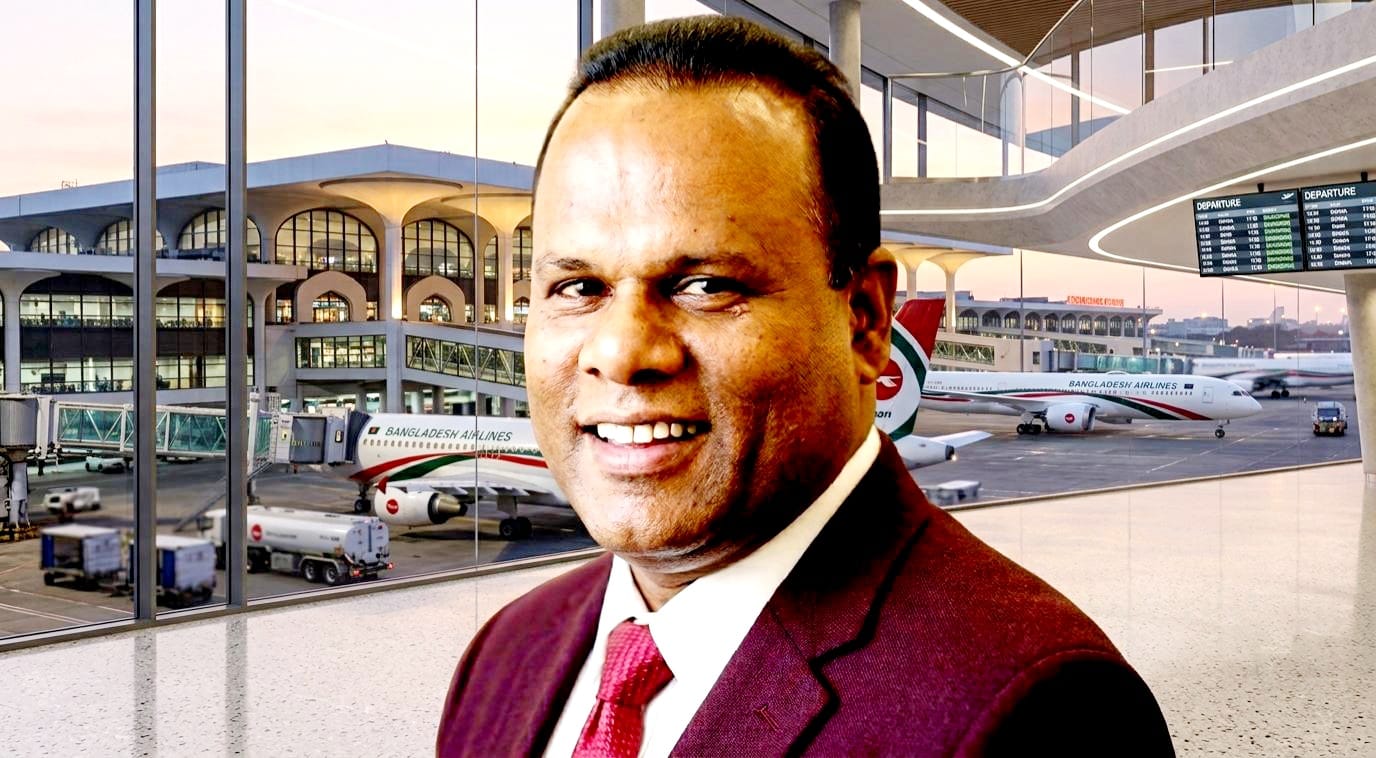
By Professor Dr. Sheikh Asif S. Mizan
Vice-Chancellor, Daaru Salaam University, Somalia; Specialist in Criminology, Governance, and Human Rights.
An international airport in an independent and sovereign state is far more than a hub for air transit. It stands as the primary visible reflection of national identity, national security, administrative efficiency, and good governance. For foreign investors, international tourists, and particularly non-resident Bangladeshi (NRB) wage earners—the backbone of the country's economy—the airport serves as the initial benchmark for assessing a nation's capacity and civil service standards.
Long-standing allegations of mismanagement, passenger hardship, service bottlenecks, and harassment at Bangladesh's primary gateway, Hazrat Shahjalal International Airport (HSIA), can no longer be viewed merely as service delivery failures. Analyzed through the lenses of criminology, governance, and geopolitics, these issues expose deep-seated administrative incoherence, accountability deficits, and institutional weaknesses. Failure to address these systemic vulnerabilities risks undermining the nation's economic momentum, international standing, and public trust.
Rather than relying on unverified conspiracy theories, the state's immediate priority must be identifying the root causes of these failures and implementing structural reforms. Establishing a safe, transparent, passenger-centric, and internationally compliant environment at HSIA is an urgent necessity.
A History of Grievance and Public Expectations The grievances of general passengers and the diaspora community regarding HSIA have been widely documented. Prolonged waiting times for baggage clearance, unnecessary delays during customs and immigration procedures, severe shortages of luggage trolleys, fragmented service coordination, and reports of discourteous behavior by frontline personnel consistently taint the passenger experience.
Expatriate workers make invaluable contributions to the national economy. Enduring separation from their families, their hard-earned remittances sustain both the macroeconomic framework and millions of households. When these individuals return home only to encounter undue harassment, operational chaos, or hostility, it inflicts personal distress and erodes their trust in state institutions.
While infrastructure expansion, technological integration, and the development of new terminals mark significant progress, physical upgrades are only as meaningful as the quality of service they yield. The success of an international airport cannot be measured solely by modern architecture or advanced machinery; the true index of success lies in whether passengers receive swift, secure, transparent, and dignified service.
Public expectation is unambiguous: from entry to exit, every traveler must experience security, assistance, and dignity. In place of apprehension and uncertainty, passengers should encounter state responsibility and hospitality.
Theoretical Analysis: Structural and Institutional Vulnerabilities Applying criminological and governance frameworks reveals several structural issues driving these institutional failures: conflicts between individual and organizational interests, inadequate oversight, weak accountability mechanisms, and a deficit in professional service standards.
Public Choice Theory: Public Choice Theory posits that decision-making within public institutions is often influenced by the self-interests and institutional incentives of officials, rather than pure public interest. Multiple entities operate within HSIA, including Civil Aviation, Customs, Immigration Police, security agencies, and ground handling operators. In the absence of a unified coordination mechanism, clear division of responsibilities, and an accessible grievance redress system, service delivery stalls.
Routine Activities Theory: In criminology, Routine Activities Theory suggests that misconduct or illicit behavior increases when three elements converge: a motivated offender, a suitable target, and the absence of a capable guardian or effective oversight. Uncontrolled access by unauthorized personnel, uninvestigated extortions, or unaddressed passenger complaints create structural opportunities for irregularities.
Human Rights, Hospitality, and Service Deficits: An international airport tests a state's commitment to civil service standards and basic human dignity. Courteous communication, clear signage, dedicated assistance for elderly and disabled passengers, and transparent feedback mechanisms are non-negotiable components of modern airport management.
Strategic Imperatives for Institutional Reform Resolving the systemic challenges at Hazrat Shahjalal International Airport requires a transition from ad-hoc interventions to a structured, long-term reform roadmap:
Establishment of a Unified Central Authority: A central administrative oversight body must be instituted to coordinate inter-agency operations and enforce shared accountability.
Strategic Workforce Planning and Allocation: Staffing decisions must be guided by independent workload assessments, international benchmarks, and merit-based recruitment.
Mandatory Behavioral and De-escalation Training: All personnel must undergo recurring training focused on civil communication, human rights compliance, and conflict de-escalation.
Zero-Tolerance Policy Against Misconduct: Robust enforcement mechanisms, digital complaint kiosks, and mobile courts must operate on-site to address extortion and bribery.
Integration of Smart Surveillance and AI Technologies: Automated luggage tracking systems and smart CCTV analytics should be deployed to streamline operations and mitigate security risks.
Service Standard Timeframes for Baggage Handling: Strict performance metrics must be established for maximum allowable times between flight touchdown and luggage placement on arrival carousels.
Independent Audits and Public Transparency: Regular quality audits and passenger satisfaction surveys should be conducted to evaluate performance metrics and foster public trust.
Conclusion Hazrat Shahjalal International Airport is fundamentally linked to Bangladesh's economic resilience, international relations, diaspora welfare, and global standing. Operational failures and passenger grievances must not be treated as isolated incidents, but addressed through systemic governance reform.
Upholding national dignity demands transparent administrative frameworks, skilled personnel, technological integration, and unyielding accountability. Ensuring a secure, efficient, and welcoming environment for returnees, foreign guests, and investors remains an essential duty of the state.
By Professor Dr. Sheikh Asif S. Mizan, Vice-Chancellor, Daaru Salaam University, Somalia; Specialist in Criminology, Governance, and Human Rights.
— Daily Best News Desk • Fearless in the search for truth
Reported by Professor Dr. Sheikh Asif S. Mizan, Article Author • Edited by the Daily Best News desk. Send corrections to [email protected].