Rohingya Crisis Not Bangladesh's Burden Alone to Solve: State Minister Kabir

Best News Desk
১০-৯-২০২৬ দুপুর ১:৩২
Rohingya Crisis Not Bangladesh's Burden Alone to Solve: State Minister Kabir
State Minister for Foreign Affairs Humayun Kabir has firmly stated that the Rohingya crisis is not a burden for Bangladesh to bear and resolve alone, calling for robust international partnership, consistent humanitarian funding, and sustainable political solutions to ensure safe repatriation.
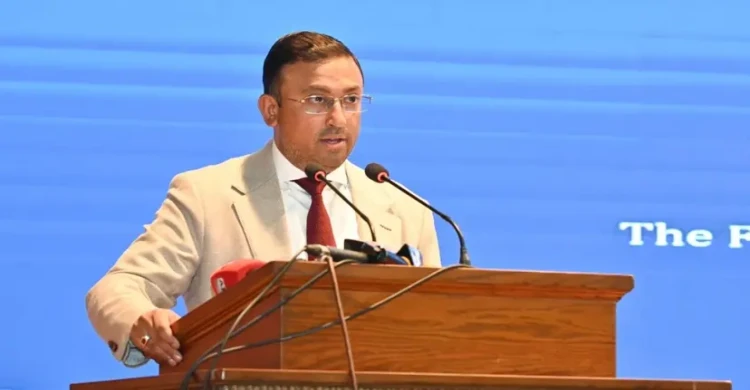
Speaking as the chief guest at a seminar on the Rohingya crisis held at the Foreign Service Academy in Dhaka on Thursday (September 10), Kabir emphasized that Bangladesh’s objective regarding the displaced population remains clear: safe, voluntary, dignified, and sustainable repatriation to Myanmar.
"Repatriation does not mean merely crossing a border. It means returning to a place where people can live with security, rights, dignity, and confidence in their future. This requires creating conditions in Myanmar that make such repatriation genuinely sustainable," the state minister said.
Highlighting the magnitude of the humanitarian effort, Kabir noted that Bangladesh has provided shelter to more than one million forcibly displaced Myanmar nationals, bearing immense pressure on its economy, environment, public services, local host communities, and national security while demonstrating exemplary humanitarian leadership.
However, he cautioned that humanitarian duties must not be misconstrued as limitless responsibilities. "The Rohingya crisis is not a crisis created by Bangladesh, nor is it a crisis that Bangladesh can solve alone. This is precisely why the international community must move beyond mere expressions of solidarity toward shared responsibility and sustained political engagement," Kabir added.
Stressing the distinction between aid and resolution, the state minister pointed out that humanitarian assistance merely manages the consequences of displacement, whereas only a political solution can bring displacement to an end. He called for secured, consistent funding for aid operations, meaningful support for host communities, strengthened regional cooperation, and diplomatic dialogue with Myanmar aimed at addressing the root causes that triggered the mass exodus.
The seminar was also addressed by Foreign Secretary Asad Alam Siam and UNHCR Representative in Bangladesh Ivo Freijsen, among others.
Best News Desk
১০-৯-২০২৬ দুপুর ১:৩২
State Minister for Foreign Affairs Humayun Kabir has firmly stated that the Rohingya crisis is not a burden for Bangladesh to bear and resolve alone, calling for robust international partnership, consistent humanitarian funding, and sustainable political solutions to ensure safe repatriation.
Speaking as the chief guest at a seminar on the Rohingya crisis held at the Foreign Service Academy in Dhaka on Thursday (September 10), Kabir emphasized that Bangladesh’s objective regarding the displaced population remains clear: safe, voluntary, dignified, and sustainable repatriation to Myanmar.
"Repatriation does not mean merely crossing a border. It means returning to a place where people can live with security, rights, dignity, and confidence in their future. This requires creating conditions in Myanmar that make such repatriation genuinely sustainable," the state minister said.
Highlighting the magnitude of the humanitarian effort, Kabir noted that Bangladesh has provided shelter to more than one million forcibly displaced Myanmar nationals, bearing immense pressure on its economy, environment, public services, local host communities, and national security while demonstrating exemplary humanitarian leadership.
However, he cautioned that humanitarian duties must not be misconstrued as limitless responsibilities. "The Rohingya crisis is not a crisis created by Bangladesh, nor is it a crisis that Bangladesh can solve alone. This is precisely why the international community must move beyond mere expressions of solidarity toward shared responsibility and sustained political engagement," Kabir added.
Stressing the distinction between aid and resolution, the state minister pointed out that humanitarian assistance merely manages the consequences of displacement, whereas only a political solution can bring displacement to an end. He called for secured, consistent funding for aid operations, meaningful support for host communities, strengthened regional cooperation, and diplomatic dialogue with Myanmar aimed at addressing the root causes that triggered the mass exodus.
The seminar was also addressed by Foreign Secretary Asad Alam Siam and UNHCR Representative in Bangladesh Ivo Freijsen, among others.