Govt Imposes 22-Day Ban on Hilsa Catching, Transportation, and Sale

Best News Desk
১৫-৯-২০২৬ দুপুর ২:৩৬
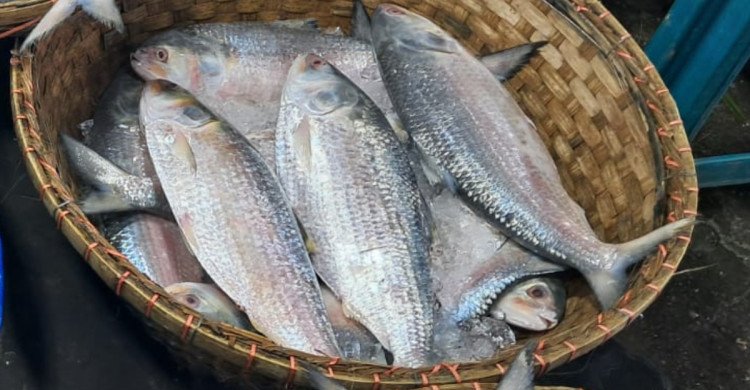
Govt Imposes 22-Day Ban on Hilsa Catching, Transportation, and Sale
The government has imposed a 22-day nationwide ban on catching, transporting, stocking, marketing, selling, and exchanging Hilsa from October 8 to October 29 to ensure the safe breeding of mother Hilsa during the peak spawning season.
The decision was finalized on Tuesday (September 15) during a meeting of the National Task Force Committee on Hilsa Resources Development, held at the conference room of the Ministry of Fisheries and Livestock. Minister for Fisheries, Livestock, and Agriculture Mohammad Amin Ur Rashid chaired the session.
To enforce the ban, nationwide drives will be conducted across critical aquatic corridors, while fishermen affected by the temporary prohibition will receive food assistance under the government's Vulnerable Group Feeding (VGF) program.
Minister Mohammad Amin Ur Rashid reiterated a zero-tolerance policy regarding the protection of spawning Hilsa. "Surveillance and operations must be intensified across major breeding sanctuaries, particularly in Barisal, Chandpur, and Bhola," he directed, instructing local administrations, the River Police, the Coast Guard, and the Department of Fisheries to coordinate their enforcement operations with additional logistical support where necessary.
The Minister also ordered strict monitoring of ice mills, wholesale fish markets, and storage depots to prevent illicitly caught Hilsa from entering supply chains, while calling for prompt operations to remove illegal nets from major estuaries like the Chandpur Mohona.
State Minister for Fisheries and Livestock Sultan Salauddin Tuku stressed the urgency of addressing declining Hilsa yields through dedicated research. "Identifying operational gaps and weakness in our conservation pipeline is essential," Tuku remarked, adding that strict measures must target the manufacturing and distribution of illegal fishing gear.
Addressing broader economic concerns, the State Minister expressed alarm over rising fish imports caused by reduced domestic Hilsa yields. He pledged a comprehensive action plan to protect Hilsa as a key national asset and Geographical Indication (GI) product, while ensuring that government aid reaches genuine fishermen without leakage.
The meeting was attended by Fisheries and Livestock Secretary Md. Delwar Hossain, Bangladesh Fisheries Development Corporation Chairman Md. Mir Hossain, Director General of the Department of Fisheries Dr. Md. Khaled Kanak, and Director General of the Bangladesh Fisheries Research Institute Dr. Md. Latiful Islam, alongside representatives from district administrations, the RAB, Coast Guard, Bangladesh Air Force, River Police, BGB, Dhaka University, and the National Fishermen's Association.
Best News Desk
১৫-৯-২০২৬ দুপুর ২:৩৬
The government has imposed a 22-day nationwide ban on catching, transporting, stocking, marketing, selling, and exchanging Hilsa from October 8 to October 29 to ensure the safe breeding of mother Hilsa during the peak spawning season.
The decision was finalized on Tuesday (September 15) during a meeting of the National Task Force Committee on Hilsa Resources Development, held at the conference room of the Ministry of Fisheries and Livestock. Minister for Fisheries, Livestock, and Agriculture Mohammad Amin Ur Rashid chaired the session.
To enforce the ban, nationwide drives will be conducted across critical aquatic corridors, while fishermen affected by the temporary prohibition will receive food assistance under the government's Vulnerable Group Feeding (VGF) program.
Minister Mohammad Amin Ur Rashid reiterated a zero-tolerance policy regarding the protection of spawning Hilsa. "Surveillance and operations must be intensified across major breeding sanctuaries, particularly in Barisal, Chandpur, and Bhola," he directed, instructing local administrations, the River Police, the Coast Guard, and the Department of Fisheries to coordinate their enforcement operations with additional logistical support where necessary.
The Minister also ordered strict monitoring of ice mills, wholesale fish markets, and storage depots to prevent illicitly caught Hilsa from entering supply chains, while calling for prompt operations to remove illegal nets from major estuaries like the Chandpur Mohona.
State Minister for Fisheries and Livestock Sultan Salauddin Tuku stressed the urgency of addressing declining Hilsa yields through dedicated research. "Identifying operational gaps and weakness in our conservation pipeline is essential," Tuku remarked, adding that strict measures must target the manufacturing and distribution of illegal fishing gear.
Addressing broader economic concerns, the State Minister expressed alarm over rising fish imports caused by reduced domestic Hilsa yields. He pledged a comprehensive action plan to protect Hilsa as a key national asset and Geographical Indication (GI) product, while ensuring that government aid reaches genuine fishermen without leakage.
The meeting was attended by Fisheries and Livestock Secretary Md. Delwar Hossain, Bangladesh Fisheries Development Corporation Chairman Md. Mir Hossain, Director General of the Department of Fisheries Dr. Md. Khaled Kanak, and Director General of the Bangladesh Fisheries Research Institute Dr. Md. Latiful Islam, alongside representatives from district administrations, the RAB, Coast Guard, Bangladesh Air Force, River Police, BGB, Dhaka University, and the National Fishermen's Association.