Tasnim Jara Questions True Scope of Public Rights Beyond Voting

Best News Desk
১৫-৯-২০২৬ বিকাল ৭:২
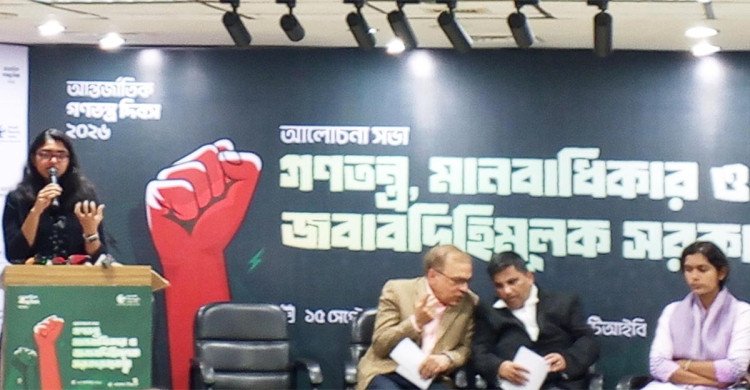
Tasnim Jara Questions True Scope of Public Rights Beyond Voting
Limiting democracy strictly to quinquennial elections and routine transfers of power strips the system of its core significance, former National Citizen Party (NCP) leader Dr. Tasnim Jara observed on Tuesday. She asserted that the true test of democratic governance lies in how effectively citizens' rights, public service delivery, institutional accountability, and decentralization are guaranteed during the interim periods between elections.
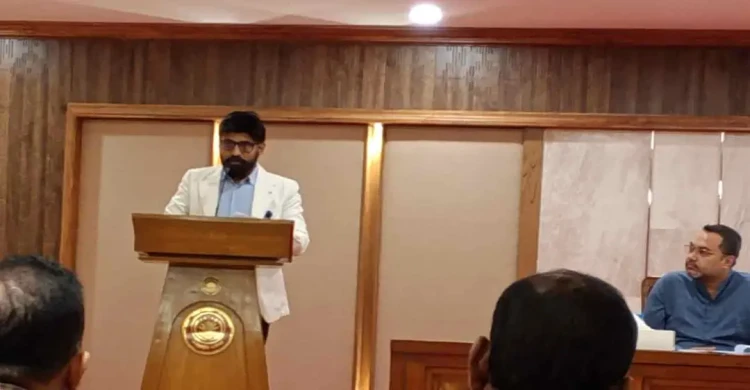
Dr. Jara made the remarks while addressing a discussion titled "Democracy, Human Rights, and Accountable Governance" organized by Transparency International Bangladesh (TIB) at its Dhanmondi office to mark International Democracy Day.
"In many instances, we mistakenly define democracy solely by whether elections are held or whether power changes hands every five years," Dr. Jara said. "However, real democracy is practiced in the intervening years between elections, during which the true picture of citizens' rights, institutional accountability, and public services comes to light."
Expressing concern over electoral practices, the former NCP leader highlighted systemic irregularities and the disproportionate role of money in politics. She cited a TIB report showing that nearly 70 percent of parliamentary candidates violated the Election Commission's statutory spending cap of Tk 25 lakh, expending an average of Tk 1.64 crore instead. She questioned the origins of these funds and warned that candidates subsequently exploit corruption, extortion, and systemic loopholes to recover their campaign expenditures at the expense of public services.
Expanding on the concept of "democracy for and by businessmen," Dr. Jara argued that democratic privileges in Bangladesh have become exclusive to elite networks comprising influential politicians, bureaucrats, businessmen, and media figures.
Contrasting service delivery standards, she cited healthcare as an example: "A regular citizen visiting Dhaka Medical College Hospital often struggles to secure basic supplies like normal saline or gauze, whereas ministers and VIPs receive instant, unhindered service. Public services are structured around privilege rather than citizenship rights."
Critiquing structural continuity in the current political landscape, Dr. Jara remarked that while names, banners, and superficial models may change, the underlying rent-seeking structures and corrupt mechanisms remain entrenched to serve elite interests. She emphasized the imperative of fostering a robust opposition, an open civic space, and proactive media and civil society oversight.
Concluding her address, Dr. Jara reiterated that democracy is an ongoing struggle rather than a static gift. "The moment we cease fighting to protect our rights, those positioned to profit from disenfranchisement will take them away. Democracy must be defended daily," she urged.
The discussion was attended by Prime Minister's Advisor Dr. Mahdi Amin, Chairman of the Parliamentary Standing Committee on the Ministry of Law, Justice and Parliamentary Affairs Barrister Muhammad Naushad Zamir, Bangladesh Samajtantrik Dal (BASAD) Barisal District Committee Member Secretary Manisha Chakraborty, and TIB Executive Director Dr. Iftekharuzzaman.
Best News Desk
১৫-৯-২০২৬ বিকাল ৭:২
Limiting democracy strictly to quinquennial elections and routine transfers of power strips the system of its core significance, former National Citizen Party (NCP) leader Dr. Tasnim Jara observed on Tuesday. She asserted that the true test of democratic governance lies in how effectively citizens' rights, public service delivery, institutional accountability, and decentralization are guaranteed during the interim periods between elections.
Dr. Jara made the remarks while addressing a discussion titled "Democracy, Human Rights, and Accountable Governance" organized by Transparency International Bangladesh (TIB) at its Dhanmondi office to mark International Democracy Day.
"In many instances, we mistakenly define democracy solely by whether elections are held or whether power changes hands every five years," Dr. Jara said. "However, real democracy is practiced in the intervening years between elections, during which the true picture of citizens' rights, institutional accountability, and public services comes to light."
Expressing concern over electoral practices, the former NCP leader highlighted systemic irregularities and the disproportionate role of money in politics. She cited a TIB report showing that nearly 70 percent of parliamentary candidates violated the Election Commission's statutory spending cap of Tk 25 lakh, expending an average of Tk 1.64 crore instead. She questioned the origins of these funds and warned that candidates subsequently exploit corruption, extortion, and systemic loopholes to recover their campaign expenditures at the expense of public services.
Expanding on the concept of "democracy for and by businessmen," Dr. Jara argued that democratic privileges in Bangladesh have become exclusive to elite networks comprising influential politicians, bureaucrats, businessmen, and media figures.
Contrasting service delivery standards, she cited healthcare as an example: "A regular citizen visiting Dhaka Medical College Hospital often struggles to secure basic supplies like normal saline or gauze, whereas ministers and VIPs receive instant, unhindered service. Public services are structured around privilege rather than citizenship rights."
Critiquing structural continuity in the current political landscape, Dr. Jara remarked that while names, banners, and superficial models may change, the underlying rent-seeking structures and corrupt mechanisms remain entrenched to serve elite interests. She emphasized the imperative of fostering a robust opposition, an open civic space, and proactive media and civil society oversight.
Concluding her address, Dr. Jara reiterated that democracy is an ongoing struggle rather than a static gift. "The moment we cease fighting to protect our rights, those positioned to profit from disenfranchisement will take them away. Democracy must be defended daily," she urged.
The discussion was attended by Prime Minister's Advisor Dr. Mahdi Amin, Chairman of the Parliamentary Standing Committee on the Ministry of Law, Justice and Parliamentary Affairs Barrister Muhammad Naushad Zamir, Bangladesh Samajtantrik Dal (BASAD) Barisal District Committee Member Secretary Manisha Chakraborty, and TIB Executive Director Dr. Iftekharuzzaman.